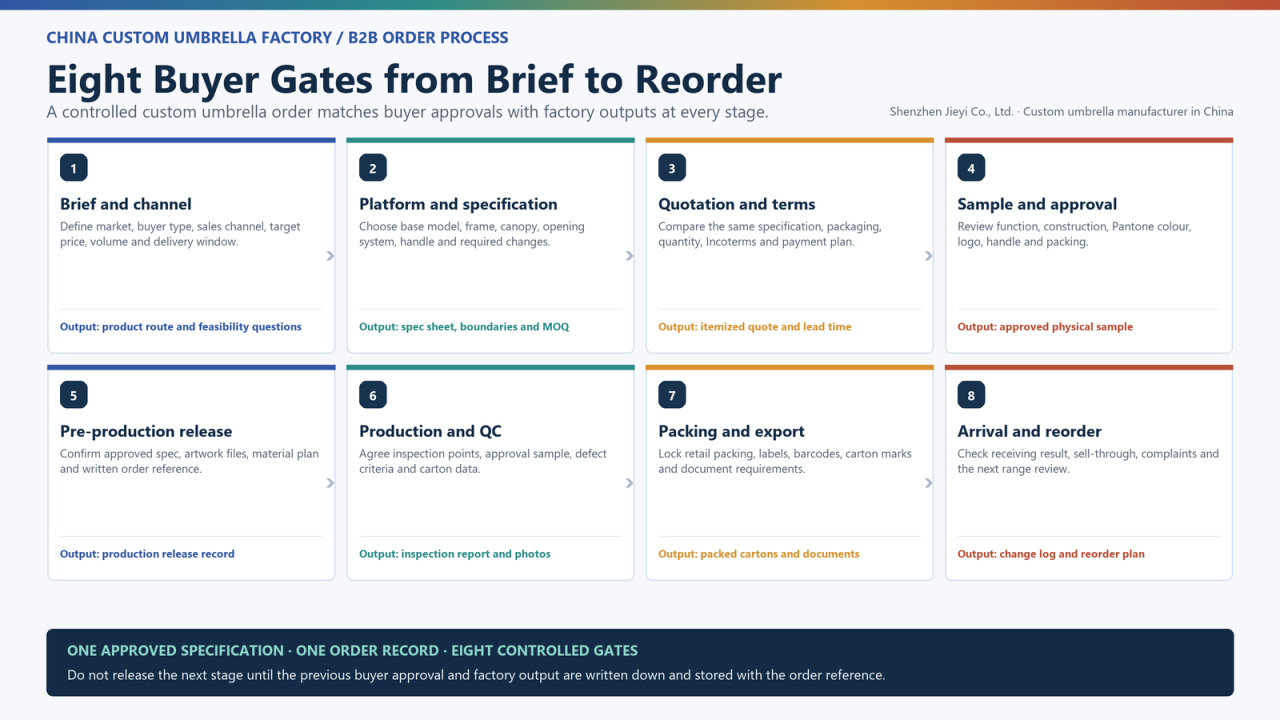
Quick answer: a China custom umbrella factory B2B order should move through eight controlled gates: channel brief, platform and specification, quotation, sample approval, pre-production release, production and QC, export packing, and arrival review. The process works when every buyer approval and factory output is written into the same order record.
Why the B2B order process matters
Buyers often compare factories on unit price before the product is fully defined. That makes quotations difficult to compare and increases the risk of a sample that does not match the commercial promise. A clear process keeps price, specification, approval and delivery tied to one controlled order.
Gate 1: Channel brief and product fit
Start with the market, buyer type, sales channel, target retail price, expected volume and required delivery window. A hotel program, promotional campaign, retail private label and online gift range can use the same factory platform but still need different specifications, packaging and price points.
The brief should state how the umbrella will be sold or used and who can approve the sample. A complete brief lets the factory propose a realistic product route instead of quoting an undefined item. An umbrella RFQ checklist helps organise these details before the first quotation.
Gate 2: Platform and specification
Choose the base platform before artwork. Confirm straight or folding, automatic or manual, canopy size, fabric, frame, ribs, shaft, handle and opening system. Then define the customisation level: stock options, a modified platform or full OEM development. The custom umbrella customization levels explain where those boundaries usually sit.
A platform-based approach gives both sides a known starting point. The buyer explains the use case and required changes, while the factory confirms which parts can be reused and which changes trigger new sampling or tooling. The factory platform development guide covers this decision in more detail.
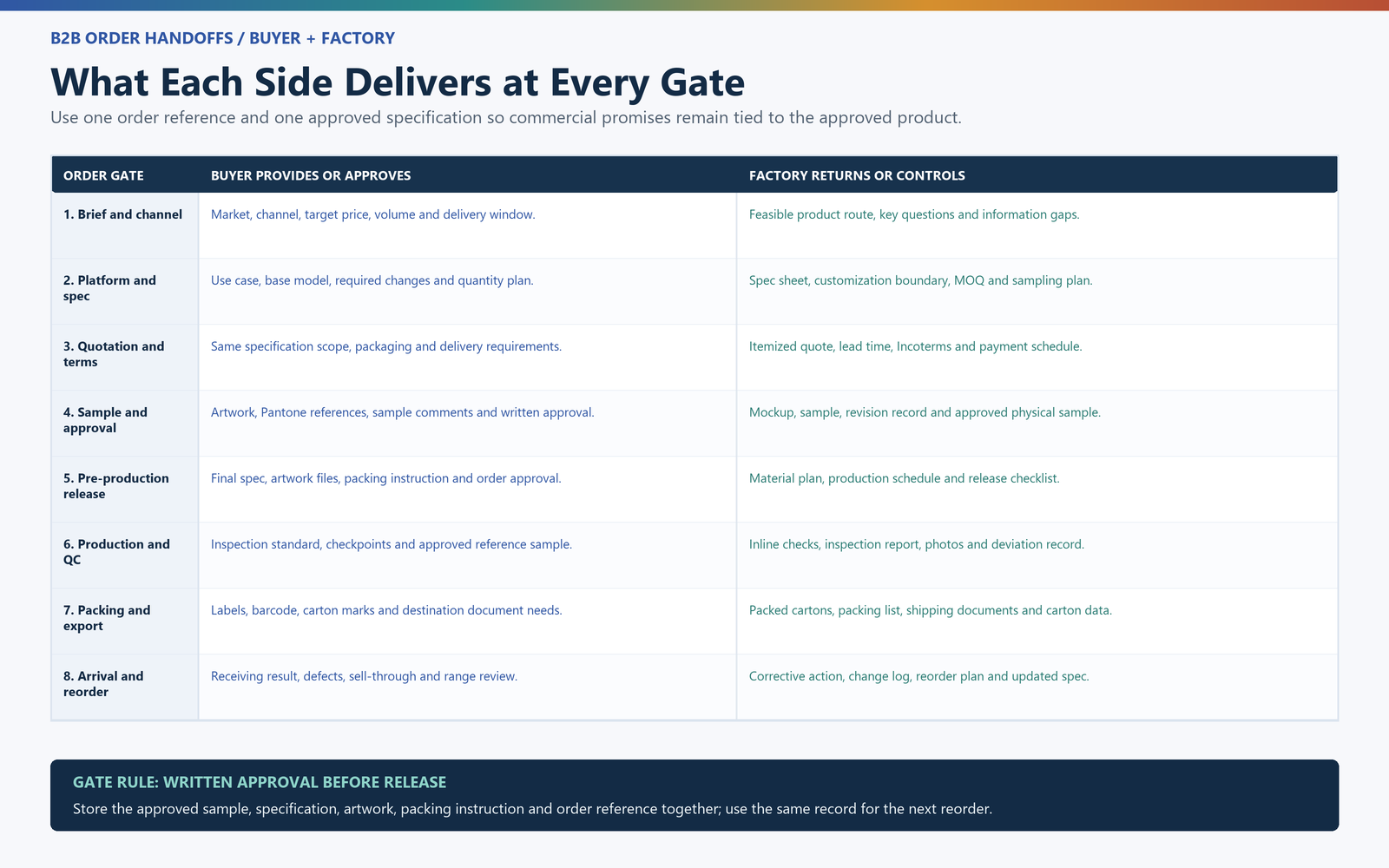
Gate 3: Quotation and commercial terms
Compare quotations only when the platform, customisation level, packaging, quantity and delivery scope are the same. Ask for an itemised quotation that separates the product, packaging, sample, tooling, inspection and freight responsibilities. Confirm the Incoterm, payment schedule, production lead time and quotation validity.
The OEM and ODM route should also be clear before price approval. The OEM versus ODM guide explains how development ownership and tooling affect cost, timing and MOQ.
Gate 4: Sample approval
The sample is the physical reference for the order. Check function, dimensions, canopy colour, logo position, print method, handle, finish and packing. Written comments should refer to the sample number, photo or measured point rather than general feedback such as colour not acceptable.
When the sample requires changes, record what changed and request a revised sample if the change affects fit, function or appearance. For a new construction, the new umbrella product development process shows how concept, prototype, testing and approval connect.
Gate 5: Pre-production release
Bulk production should not begin until the buyer approves the final specification, artwork files, Pantone references, packaging instruction and order quantity in writing. The factory should return a production schedule, material plan and release checklist that match the approved quotation.
This gate prevents silent changes. If a material, logo size, carton mark or delivery date changes after release, both sides should record the reason, the approver and the effect on cost or timing.
Gate 6: Production and QC
Agree on the inspection standard, checkpoints and approved reference sample before production starts. The factory should control incoming materials, printing, assembly and final inspection. The buyer should know who receives inspection photos, who can approve a deviation and when production must stop.
The inside an umbrella factory guide explains the physical production sequence. The B2B order process adds a control layer: inspection criteria and approval records must match the same specification used for the sample.
Gate 7: Packing and export
Confirm retail packing, fabric sleeve, poly bag, gift box, label, barcode, carton mark and shipping mark. Carton count, gross weight, net weight and dimensions should be recorded before shipment because they affect freight, storage and receiving.
The packing list and shipping documents should match the packed goods and the approved order. The umbrella import, QC, carton and shipping checklist covers the buyer-side checks.
Gate 8: Arrival and reorder
After arrival, record the receiving result, carton condition, quantity, visible defects and sell-through. The reorder should reuse the approved specification and sample record. If a future order changes fabric, frame, logo, handle or packing, treat it as a controlled change rather than an assumed repeat.
Common B2B process mistakes
Common mistakes include quoting before the brief is complete, comparing suppliers on different specifications, approving a sample without a reference number, changing artwork after production release, allowing an unnamed person to approve deviations, treating carton data as an afterthought and offering exclusivity without a performance review.
How Shenzhen Jieyi supports the process
Shenzhen Jieyi Co., Ltd. is a Shenzhen-based manufacturer of umbrellas, beach umbrellas, garden umbrellas and outdoor shade products. The company supports global brands, importers, wholesalers, retailers, hotels and promotional buyers with product development, sampling, production, quality control and export coordination.
Customisation support includes fabrics, frames, ribs, handles, Pantone colour matching, logo printing, private-label packaging and OEM or ODM development. Learn more on our factory workflow page and the OEM Custom service page.
Frequently asked questions
What is the first step in a custom umbrella B2B order?
Start with the channel brief and a defined use case. Market, quantity, price position, packaging and delivery requirements should be clear before the factory quotes.
When should a buyer approve a sample?
Approve the sample only after checking function, dimensions, colour, logo, handle, finish and packing against the written specification.
Can a reorder skip sampling?
A reorder can reuse the approved specification when materials and construction have not changed. Any functional or appearance change may require a new sample.
What should be stored in the order record?
Keep the brief, specification, quotation, sample approval, artwork files, packaging instruction, QC criteria, packing list, shipping documents and change log together.
Start a custom umbrella order
Send the market, channel, base model, target quantity, customisation level and delivery window through our contact page. We will review the practical B2B order route for your custom umbrella program.
Order evidence pack: what to keep at every stage
| Stage | Buyer document | Factory evidence |
|---|---|---|
| Brief | Market, channel, quantity, target price and delivery date. | Feasibility notes, platform advice and open questions. |
| Quotation | Comparable specification matrix. | Material, packing, tooling, sample and production assumptions. |
| Sampling | Artwork files and approval comments. | Sample photos, dimensions and courier record. |
| Approval | Signed sample and colour approval. | Revision-controlled specification sheet. |
| Production | Purchase order and change requests. | Material confirmation and production schedule. |
| Inspection | Acceptance criteria and release instruction. | Measurement, function, packing and quantity record. |
| Shipment | Destination and document requirements. | Packing list, carton marks and shipping file. |
Use the RFQ checklist to create the first two rows before asking for price.
Where B2B umbrella orders lose time
| Delay point | Why it happens | Control |
|---|---|---|
| Incomplete brief | The factory quotes one assumption while the buyer expects another. | Freeze product, quantity, branding, packing and delivery in writing. |
| Artwork revision | Logo size, Pantone colour or panel position is approved late. | Approve artwork on the actual fabric and keep one revision sheet. |
| Sample change | Structural changes are introduced after the platform is approved. | Separate cosmetic changes from engineering changes. |
| Packaging delay | Retail box or label requirements are added after production starts. | Approve packaging with the product sample. |
| QC ambiguity | Inspection criteria are not tied to the approved sample. | Write pass-or-fail criteria into the purchase order. |
Connect the process to the OEM process milestones, the factory platform guide and the inside an umbrella factory guide.
Start with a factory-ready package
Send one package containing the brief, target market, quantity, artwork, packaging requirement, delivery window and reference product. This lets the factory team confirm the route, sampling plan and commercial assumptions without restarting the discussion.
For related sourcing decisions, review the custom umbrella development hub and the customization levels guide.