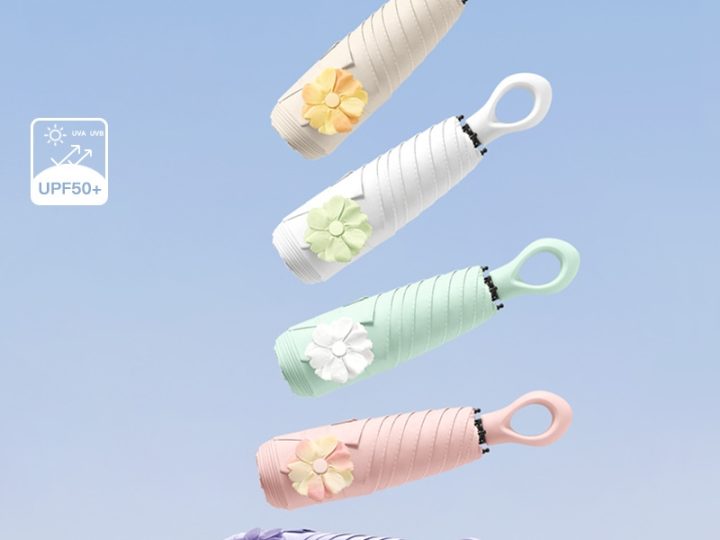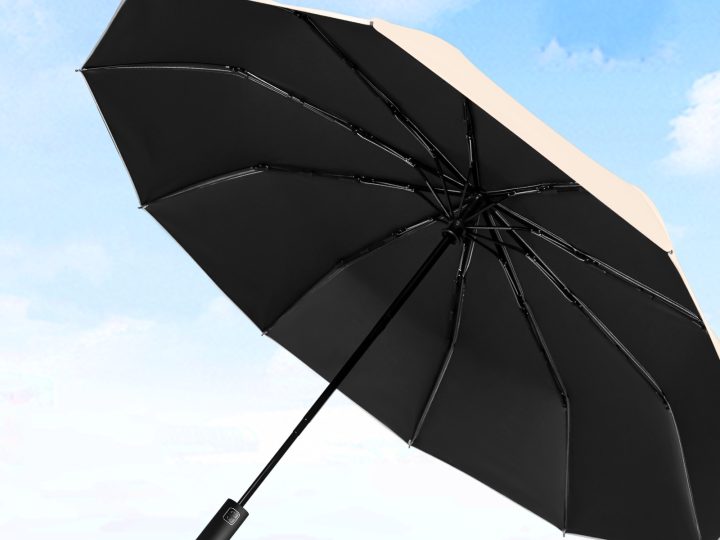
Quick answer: umbrella customization usually falls into three levels. Level 1 uses a stock platform with branding changes. Level 2 modifies an existing platform through colour, fabric, handle, frame, or packaging changes. Level 3 develops a fully custom umbrella with a new structure, mechanism, or component. Higher customization increases differentiation, development work, MOQ, tooling, and risk.
Buyers should choose the lowest level that delivers the required customer benefit and brand position.
Level 1: stock platform with branding
In the first level, the factory uses an existing frame, canopy size, opening system, and handle. The customization focus is the brand: canopy print, sleeve, label, packaging, and perhaps a small handle colour choice.
This level offers the shortest sampling time and lowest development cost. It works for promotional campaigns, employee gifts, retail tests, and event merchandise where speed and value are more important than a unique structure.
The buyer should still approve the exact stock model, fabric, coating, print placement, sleeve, and carton. A logo on a generic product is not enough if the platform does not match the intended price or user.
Review the difference between selecting vs manufacturing a product in our OEM vs ODM guide.
Level 2: modified stock umbrella
Level 2 starts with a proven platform but changes one or more components or specifications. Typical changes include canopy fabric, coating, colour, print method, rib material, shaft finish, handle shape, runner, sleeve, or retail box.
This is usually the best balance for brands that need differentiation without creating a new umbrella mechanism. The frame base reduces structural risk, while the modified components create a product that feels specific to the brand.
The factory must assess how each change affects the others. A heavier handle can change balance and packed weight. A thicker canopy or coating can affect folding, colour, and drying. A new sleeve can change carton quantity and freight.
Level 3: full OEM or ODM development
Level 3 introduces a new canopy pattern, frame, mechanism, handle tool, packaging structure, or complete product concept. The factory and buyer may need drawings, tooling, prototypes, performance tests, pilot production, and a new quality plan.
This level creates the strongest differentiation but also the highest cost and longest timeline. It should be used when the customer benefit cannot be delivered by modifying an existing platform.
Full development may still use standard components internally. A new product does not need every screw and spring to be unique. Engineers should reuse qualified parts wherever they do not limit the design.
See the factory workflow in our new umbrella development guide.
Compare the three customization levels
| Level | Best for | Design and components | Sampling and packaging | Main trade-off |
|---|---|---|---|---|
| Stock + branding | Speed, promotions, gifts and market tests | Factory platform stays fixed; print, label and packaging carry the brand. | Mock-up and packing sample with a shorter approval path. | Fastest route, but lower structural differentiation. |
| Modified stock | Private label, retail ranges and channel-specific products | Selected parts change: fabric, coating, colour, handle, frame, runner or sleeve. | Approve each changed component and the complete packed sample. | Useful differentiation with moderate development and MOQ risk. |
| Full OEM | Buyer-controlled design, new components or a unique product brief | New structure, tooling, mechanism, canopy pattern or handle can be developed. | Prototype, testing, pilot run and final production sample. | Strongest differentiation, with higher tooling, cost and timeline. |
| ODM | Buyers adapting a factory-developed model under their brand | Factory owns the underlying development; buyer selects platform, finish and branding. | Platform sample, branding proof and packed approval sample. | Faster than a blank-sheet design, but existing architecture limits unique changes. |
How customization changes cost and MOQ
The stock platform itself may be inexpensive, but a new handle mould, custom canopy print, special coating, or rigid packaging can add setup and minimum-order requirements.
Ask for MOQ by component. A print colour, fabric lot, handle, shaft, and box may each have different minimum quantities. Sometimes a simpler packaging change or one fewer print colour can reduce the effective MOQ without weakening the product.
The umbrella RFQ checklist helps keep those requirements in one specification.
How colour and materials affect the decision
Fabric colour, coating, print, and trim are highly visible. They can create a strong brand effect with limited structural change. However, every new colour or material needs a physical reference and production tolerance.
Review how the colour behaves on the actual canopy and coating using our color matching guide. For retail products, coordinate the canopy, label, sleeve, and box before ordering materials.
How packaging changes the customization level
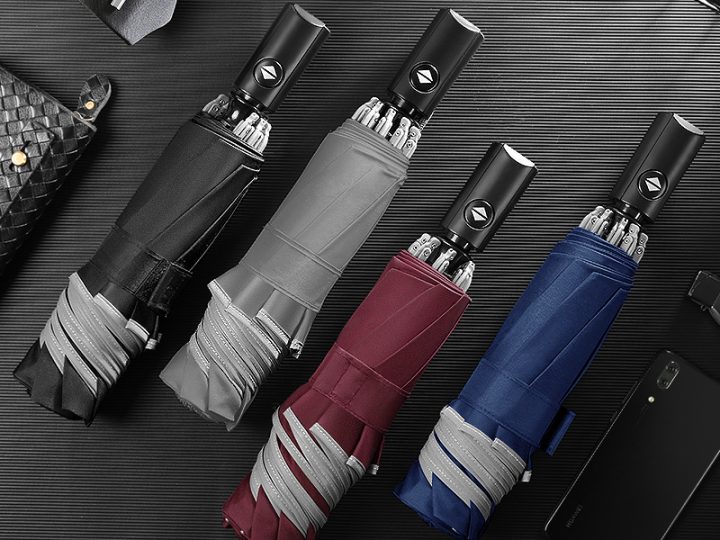
A stock umbrella with a custom sleeve and retail carton can feel very different from the same umbrella packed in a generic bag. Packaging is often the fastest way to increase perceived value without changing the frame.
A rigid gift box, custom insert, or paper tube may move the project closer to full customization because it requires new tooling and carton planning. Compare the options in our custom umbrella packaging guide.
Which customization level should you choose?
Choose Level 1 when time, price, and volume are the main priorities. Choose Level 2 when the brand needs a distinct colour, finish, handle, insert, or packaging while retaining a proven frame. Choose Level 3 only when the required function or appearance cannot be achieved through modification. A worked example of a Level 2 appearance change is the punk silver-ring customization example, where trim and print carry the design while the frame stays standard.
Write down the customer benefit, target price, first quantity, future volume, and launch date. These four factors usually make the decision clear.
Sample plan by level
- Level 1: approve the stock model, mockup, print placement, and packaging sample.
- Level 2: approve every changed component, function, colour, and packed sample.
- Level 3: approve concept, prototype, test result, pilot run, and final production sample.
At every level, keep a physical approved sample and record the exact materials and processes used.
Conclusion
Umbrella customization is a scale, not a single service. The right level delivers the required differentiation without adding unnecessary tooling, MOQ, or risk. Start with a proven platform, change the components that matter most, and move to full development only when the customer benefit justifies it.
For a factory-led project, review the new umbrella customization guide, the OEM custom umbrella process, and the low-MOQ customization FAQ.
Continue the decision: if the selected level will be launched as an agent or private-label range, use the private-label umbrella launch guide to define the sample kit and launch checkpoints. If the change involves canopy construction, compare the trade-offs in the single versus double canopy umbrella guide before freezing the specification.
Frequently asked questions
What are the three umbrella customization levels?
Level 1 uses a stock platform with branding changes such as printing, labels, or packaging. Level 2 modifies an existing platform through colour, fabric, handle, frame, or packaging changes. Level 3 develops a new umbrella through OEM or ODM work that may involve new tooling and a new frame.
Which customization level has the lowest MOQ?
Stock-platform branding usually has the lowest MOQ because the frame and canopy already exist. Modified stock raises the minimum because fabric, colour, or components change. Full OEM development has the highest minimum because tooling and setup are dedicated to the project.
How does customization affect cost?
Cost rises with the number of changes, the amount of new tooling, and the order quantity. Printing and labels are relatively low-cost changes, while a new frame, handle mould, or canopy size adds development and setup cost that must be spread across the order.
When is full OEM development worth it?
Full OEM makes sense when the product must be genuinely different, when the customer benefit justifies tooling, or when the volume is high enough to absorb development cost. If a stock platform can deliver the required look and performance, a lower level is usually faster and less risky.
Can we move from Level 1 to Level 3 over time?
Yes. Many programs start with branding on a proven platform, validate the market, and then invest in modified or fully custom development. Each stage should keep the approved specification so later changes build on a known baseline.
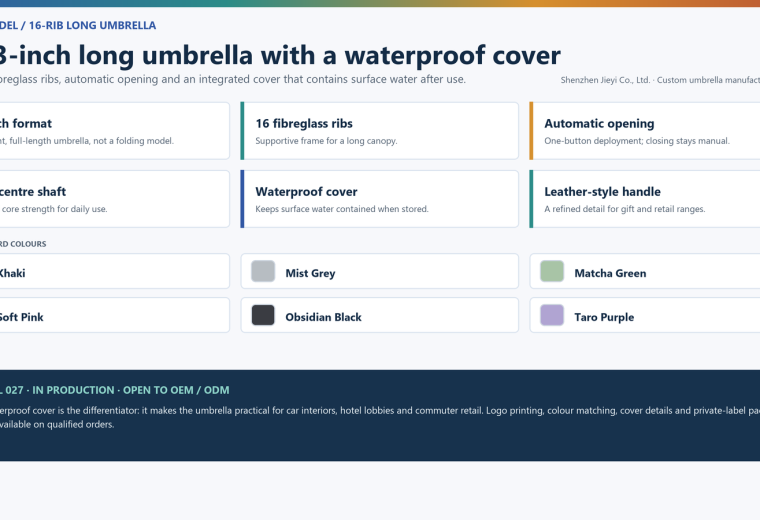
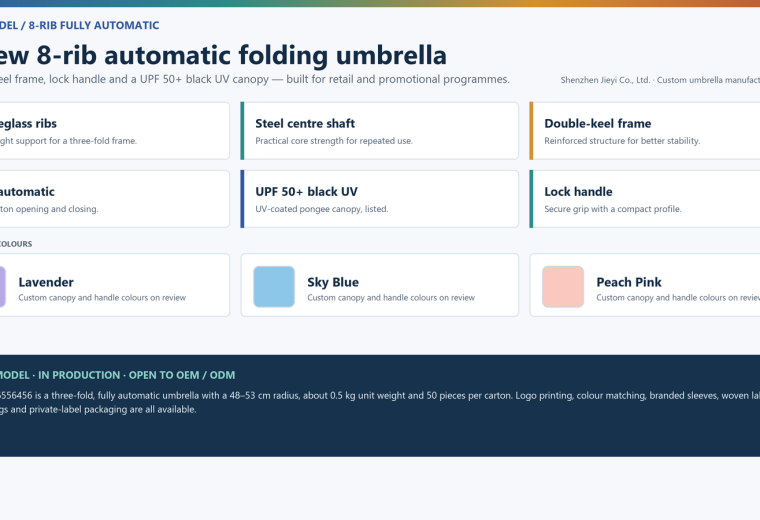
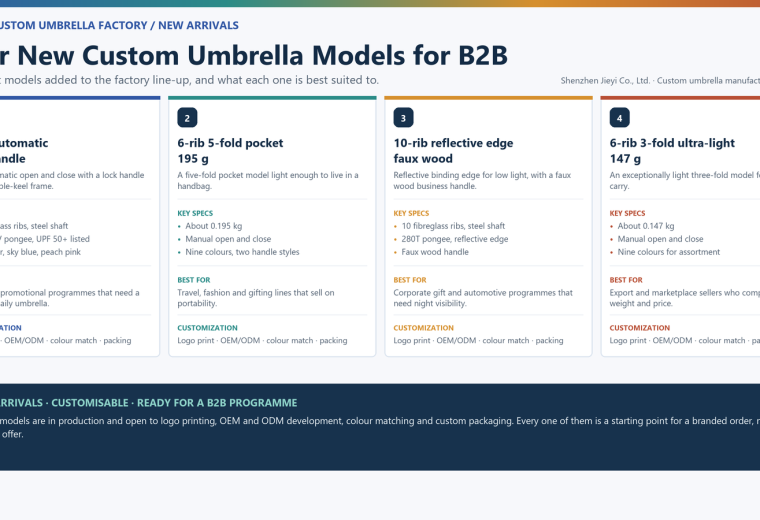
If you are choosing a structure rather than a finish, start from the custom umbrella models built on our factory platform. Functional changes such as a reverse-folding action and an LED handle are a separate decision; the 10-rib reverse umbrella with LED handle shows what that combination looks like on a standard ten-rib platform.