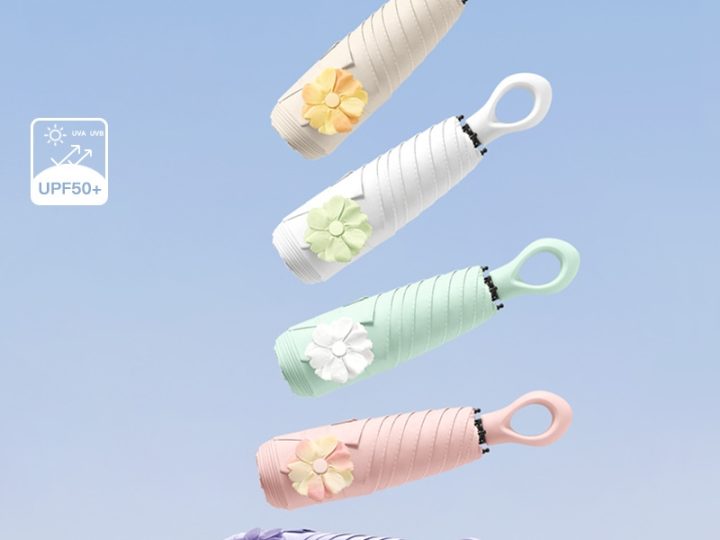
Quick answer: a modern umbrella factory turns fabric, frame components, handles, and printing into a repeatable product through a controlled sequence: incoming inspection, fabric cutting, printing, frame preparation, assembly, functional testing, final quality control, and export packing. Buyers should evaluate the factory as a system rather than assuming that a large building or a machinery list guarantees consistent output.
What happens inside a custom umbrella factory
An umbrella looks simple when it is open, but each unit combines flexible ribs, a rigid shaft, a runner, springs, a canopy, a handle, and packaging. The factory must control dimensions and appearance across every component while keeping the product easy to open, carry, and close.
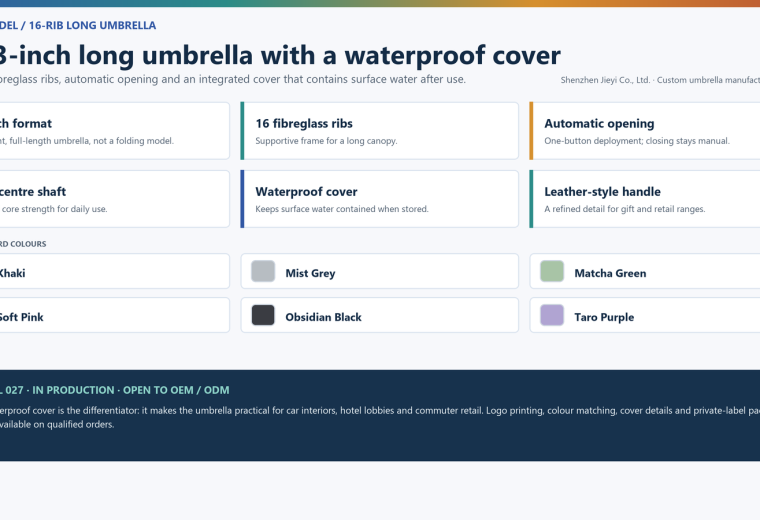
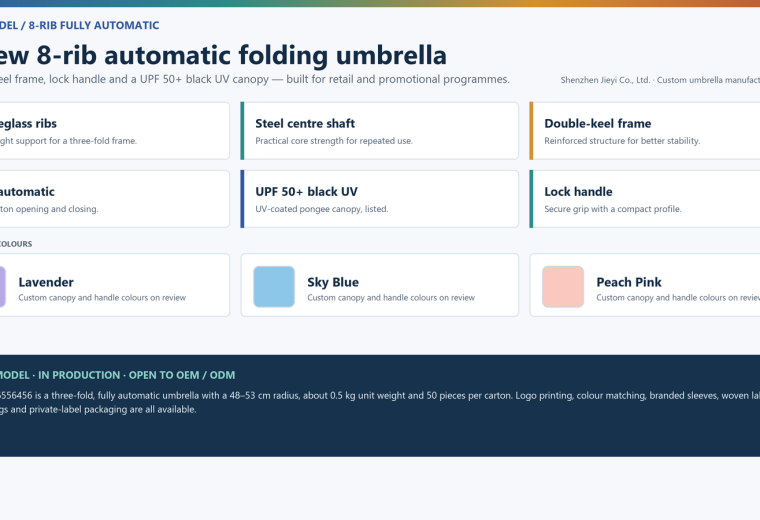
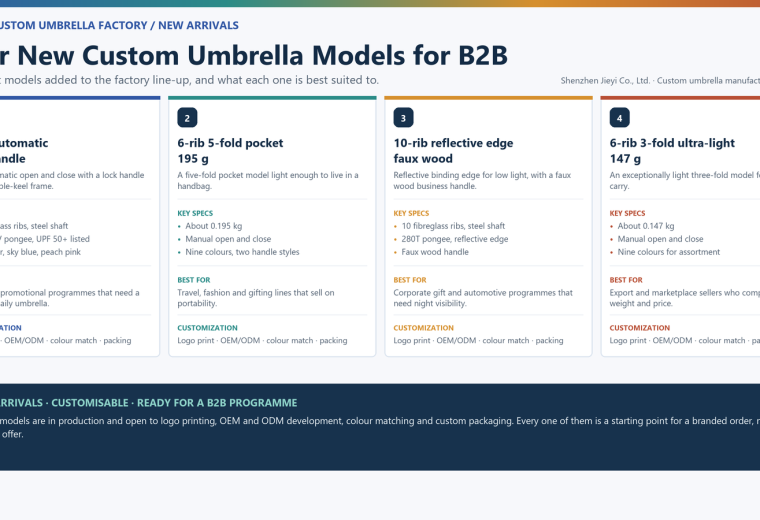
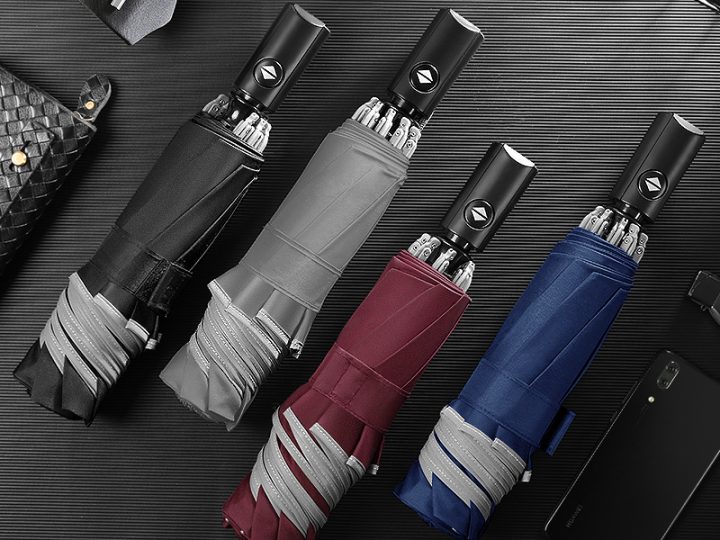
A factory that produces custom umbrellas usually works with multiple product families: folding, straight, golf, reverse, beach, garden, and specialty formats. The same production area may therefore handle different materials, canopy sizes, and assembly methods during one week.
Incoming materials and fabric inspection
The process begins before cutting. Fabric rolls, shafts, ribs, hubs, handles, zippers, labels, and cartons should be checked against the approved specification. For fabric, the team reviews colour, density, surface defects, width, coating, and lot consistency. A small difference in coating or yarn can change the final canopy appearance.
Frame components are checked for dimensions and obvious defects. Bent shafts, loose pivots, rough rib edges, or inconsistent spring tension can create problems later. Strong incoming control reduces rework and prevents the production line from correcting the same defect repeatedly.
Our umbrella fabric guide explains how buyers can define the material before it reaches the factory floor.
Canopy cutting and printing
Canopy panels are cut according to the approved pattern. The cutting plan affects fabric yield, panel alignment, and waste. For printed umbrellas, artwork is prepared around the panel layout, seams, and print positions before screens or transfer materials are produced.
Screen printing, heat transfer, and digital printing each require different preparation and quality checks. The factory must control ink colour, registration, drying, and handling so that the print does not distort when the canopy is stretched over the frame. Fabric colour approval should be completed on the actual material, as explained in our color matching guide.
Frame, shaft, and handle preparation
Metal shafts may be cut, drilled, coated, and fitted with springs or locking components. Ribs are prepared according to length and material, then combined with stretchers, hubs, and connectors. Handles may be moulded, coated, assembled, or finished before final assembly.
The critical issue is tolerance. If one component is slightly outside specification, the umbrella may open unevenly, feel stiff, or fail to lock. A factory should control the complete opening mechanism rather than treating each part as an unrelated purchase.
Umbrella assembly
Assembly connects the canopy to the frame and the frame to the shaft and handle. Operators align panels, attach ribs, install the runner and springs, and verify the opening action. For folding umbrellas, the process also includes folding the canopy into a repeatable shape and fitting the sleeve or strap.
Assembly quality affects how the product looks both open and closed. Loose stitching, uneven rib pockets, twisted panels, or a misaligned handle may not stop the umbrella from working, but they will be visible to the customer and can create returns.
Function testing and final quality control
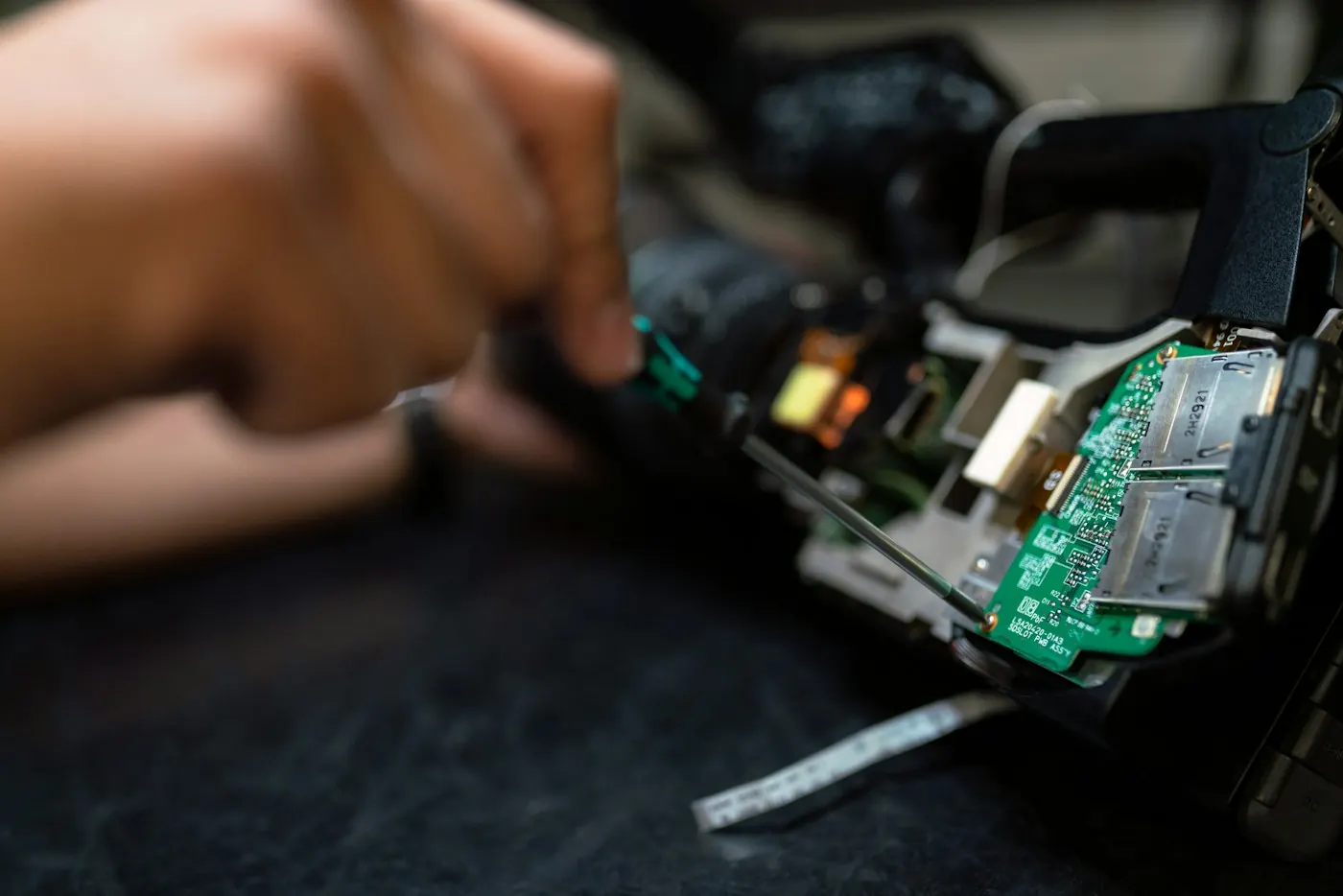
Every production batch should be checked against the approved sample. Inspectors review opening and closing, runner movement, rib recovery, canopy tension, stitching, print placement, colour, handle condition, and general appearance. The inspection plan should define the sample size, acceptance criteria, and treatment of defects.
For a retail or hospitality program, final inspection may also include barcode labels, packaging contents, unit count, and carton condition. The umbrella quality control checklist can be adapted to the product and market.
Packing and export preparation
After inspection, umbrellas are folded, sleeved, labelled, and packed into master cartons. The packing line must match the approved unit quantity and carton configuration. Carton marks, shipping documents, and pallet plans should be confirmed before the goods leave the factory.
Good packing reduces freight damage and makes receiving easier. It also protects the retail presentation. A printed gift box, sleeve, or barcode that is damaged in transit can create as much cost as a product defect.
How buyers can evaluate an umbrella factory
- Ask which operations are completed in-house and which are outsourced.
- Review the sample approval process and production reference.
- Inspect incoming material control, in-line checks, and final QC records.
- Confirm how changes to fabric, frame, handle, or packaging are controlled.
- Check capacity against your order quantity and delivery window.
- Ask how defects, corrective actions, and replacement units are handled.
- Review export experience, documentation, and destination requirements.
A factory visit or video audit should follow a written agenda. The goal is not to collect generic photos, but to verify that the product specification can be repeated in bulk. Buyers can review our factory profile and prepare questions with the RFQ checklist.
What factory-direct really means for a buyer
Factory-direct supply is valuable when it provides clear technical ownership, controlled sampling, transparent production, and direct corrective action. It does not automatically mean the lowest price. A factory may still purchase specialised components, coatings, or packaging materials from qualified suppliers.
The important question is who owns the specification and the quality result. A direct factory relationship should make it easier to trace changes, schedule production, and resolve problems before shipment.
Conclusion: judge the process, not the building
A capable umbrella factory combines trained operators, controlled materials, repeatable fixtures, defined inspection points, and clear communication. Buyers should ask how each stage is measured and how the approved sample is protected through production.
For a factory-direct project, review our OEM custom umbrella process, compare the factory-direct retail case study, and verify the relevant certifications and audit scope before placing a bulk order.
Frequently asked questions
How can a buyer evaluate an umbrella factory?
Look at incoming material control, canopy cutting and printing, frame preparation, assembly, functional testing, final quality control, and export packing as one system. Ask how defects are traced and corrected, not only how many machines the factory owns.
What should be inspected during umbrella production?
Check fabric against the approved colour and specification, verify frame dimensions and finish, review print registration and colour, and confirm the opening mechanism after assembly. Inspect the complete packed unit before shipment.
Why does fabric inspection matter so much?
Fabric determines colour, UV performance, water repellency, and appearance. A small difference in coating or yarn can change the canopy, and defects found after cutting are far more expensive to correct. Incoming inspection protects the whole production run.
How is umbrella quality controlled before shipment?
Production batches are compared against the approved sample for opening and closing, runner movement, rib recovery, canopy tension, stitching, print placement, colour, and handle condition. Final inspection also checks labels, packaging, quantity, and carton condition.
Can a factory produce several umbrella types at once?
Yes. Many factories handle folding, straight, golf, reverse, beach, and garden umbrellas, but the materials and assembly methods differ. Confirm that the factory can control the specific product family and specification you are ordering.
Looking for a factory that runs these checks on every order? See how our custom umbrella manufacturing and QC process is organised from brief to shipment.
Export orders that pass final inspection still need the right paperwork and cartons. See the umbrella import, QC and carton checklist before the shipment leaves the factory.
Outdoor product example: the double-top garden and beach umbrella China export guide applies the same factory checks to a larger canopy, including ribs, centre pole, base options, carton planning and replacement-part questions.