Quick answer: a B2B umbrella wholesale agent should launch one clearly positioned private-label umbrella before building a wide catalogue. Start with a written market brief, two or three sellable specifications, a production-representative sample kit, and agreed terms for territory, MOQ, pricing, brand ownership, lead time, and after-sales support. The first order should prove demand and create a repeatable specification, not simply test a collection of unrelated samples.
This guide is for agents, importers, distributors, and sales organisations that source custom umbrellas for retailers, promotional buyers, hotels, corporate-gift companies, or online channels.
Start with a product thesis, not a catalogue
A wholesale agent often has access to many customer types. That does not mean the first launch should contain every umbrella format. The strongest starting point is one product thesis that can be explained in a sentence: who will buy it, where it will be sold, what problem it solves, and why it should be chosen over the current option.
Write the thesis before asking a factory for prices. The factory can engineer a better product when it understands the commercial objective instead of receiving a random list of features.
Prepare a five-part new-product brief
A useful brief has five parts:
- Market: country, sales channel, target customer, and competitor benchmark.
- Use case: commuting, travel, gifting, hotel use, outdoor events, retail, or promotional campaigns.
- Commercial target: landed cost, wholesale price, retail price, and expected first-year quantity.
- Product requirement: open size, folded length, weight, canopy, frame, opening system, handle, and accessories.
- Constraints: compliance claims, logo method, packaging, carton, barcode, delivery date, and budget.
Use the umbrella RFQ checklist to reduce quotation assumptions. A factory quote is only useful when the buyer, quantity, specification, and commercial terms are comparable.
Define two or three product tiers
An agent needs enough range to sell, but not so many SKUs that sampling and inventory become unmanageable. A practical first programme can contain an entry model, a core volume model, and a premium or channel-specific model.
The tiers should differ in a way the end customer can see or feel. A different colour alone may not justify a higher price. A stronger frame, better canopy, smoother opening system, upgraded handle, premium sleeve, or gift-ready carton can create a clearer product ladder.
Review the umbrella customization levels to separate stock changes, platform customization, and full OEM development. The right level depends on the expected volume, desired differentiation, and willingness to fund new tooling.
Choose a platform that can support repeat orders
The best agent product is not necessarily the most unusual model. It is the model that can be approved, produced, inspected, reordered, and explained consistently. An existing factory platform often provides a shorter development path and more predictable component supply.
The factory-platform development guide explains how canopy, frame, handle, print, and packaging can be changed while keeping the core product proven.
New tooling may be justified when the product needs a unique mechanism, unusual folded length, signature handle, or performance claim that cannot be achieved through modification. The agent should compare development cost, MOQ, lead time, and future service risk before approving a new platform.
Build an agent sample kit that can sell
A sample is not only a quality check. It is a sales tool for the agent’s own customers. Prepare a kit that shows the base model, the main colour direction, logo or print placement, handle and hardware finish, sleeve, label, and retail packaging.
Use a production-representative sample for the final approval. A display mockup can support the first discussion, but it must not be mistaken for a bulk-production standard. Check open and folded size, weight, opening and closing, canopy tension, print registration, stitching, handle fit, and carton.
The umbrella RFQ and sampling checklist helps agents plan sample rounds and align them with the first order.
Agree the agent model, not only the product price
An agent programme needs commercial rules that protect both parties. Confirm territory or channel, target customer type, minimum first order, repeat-order MOQ, price validity, payment terms, lead-time assumptions, brand ownership, and rules for direct enquiries.
Exclusivity should be specific. A broad promise of exclusivity is difficult to manage. Define the product, territory, channel, period, and performance condition. If market exclusivity is not appropriate, agree on protected customers, launch priority, or limited product variants instead.
Clarify who owns artwork, packaging files, moulds, and product photography. The agent should be able to use approved assets for sales without losing control of its own brand materials.
Validate margin, logistics, and risk
Compare the factory price with landed cost, not with a rough unit cost alone. Include freight, duty, inspection, local delivery, payment fees, damaged stock, samples, and channel margin. A product that looks attractive at the factory door may fail after logistics and returns are included.
Launch in a controlled sequence
Begin with a written brief, factory feasibility review, digital mockup, physical sample, approved specification, pilot or first production inspection, and then a controlled market launch. Record customer feedback by product tier and use it to decide which variations should be added next.
Do not expand colours, handles, or packaging before the first product proves sell-through. Shared components and a locked specification make reorders faster and reduce the risk of an inconsistent second batch.
Private-label launch handoff: buyer and factory inputs
| Stage | Buyer supplies | Factory returns |
|---|---|---|
| Product definition | Market, channel, target customer, intended use and target price position. | Feasible platform options, specification questions and a written quotation basis. |
| Structure and materials | Preferred size, frame, opening system, canopy, handle and branding method. | Recommended construction, material options and any change that affects tooling or sampling. |
| Artwork and packaging | Logo files, colour references, label copy, packaging direction and barcode requirements. | Print placement, digital mock-up, pack artwork and points that must be confirmed on a physical sample. |
| Sample approval | Written feedback against function, appearance, colour, print and packaging. | A production-representative sample with the approved specification and signed-off changes. |
| Bulk release | Final quantity, carton marks, delivery window and inspection requirements. | Production status, inspection plan, packing data and shipment documents. |
When the model moves from launch planning into territory sales, the next document should be the umbrella distributor and agency program guide, which covers channel rights, sample kits and repeat-order reporting.
Three launch risks to lock before bulk production
Colour and material approval. Approve the actual fabric, coating and trim together under agreed lighting. A print proof on paper does not show how the final canopy colour will look.
Sample-to-bulk consistency. Keep one approved sample and record the exact frame, fabric, handle, print and packaging. A verbal “same as sample” instruction is difficult to inspect later.
Packaging and carton data. Confirm the sleeve, retail carton, labels, barcodes, carton quantity and shipping marks before production. Packaging changes late in the project can affect carton dimensions and freight planning.
Frequently asked questions
What is a private-label umbrella launch?
A private-label umbrella launch is a controlled process for selling an umbrella under the buyer’s brand. It normally includes product selection, specification, artwork, packaging, sample approval, production inspection and a repeatable reorder standard.
What should be agreed before the first private-label order?
Agree the product specification, branding and packaging files, sample standard, order quantity, delivery window, inspection requirements and commercial terms before bulk production starts.
Does a private-label umbrella require a completely new design?
No. Many launches begin with a proven factory platform and change the canopy print, colour, handle, label, sleeve or retail packaging. Full OEM development is only needed when the required structure or function cannot be achieved through platform changes.
How do we keep the second order consistent with the first?
Keep an approved production sample, record the exact materials and processes, and reference the approved specification on every purchase order. Any material, print or packaging change should go through a new sample approval.
What a strong agent launch includes
- One clear product thesis and two or three commercially different tiers.
- A complete brief covering market, price, specification, packaging, and delivery.
- One factory platform or controlled new-tooling decision.
- A production-representative sample plus a customer-facing sales kit.
- Written terms for MOQ, territory, brand, pricing, lead time, and service.
- A pilot order, quality inspection, and a repeatable reorder specification.
For the factory-side structure, see the OEM Custom umbrella program. Explore the custom umbrella range or review more B2B umbrella sourcing guides before finalising the first launch.
Use the four core categories to build the first agent range
An agent does not need a catalogue of unrelated products. Choose an entry compact model, a business gift model, a rain-led volume model and an outdoor model only when the target channel can support it.
| Buyer use | Product category | Indexed product example | Why it fits | Confirm before quoting |
|---|---|---|---|---|
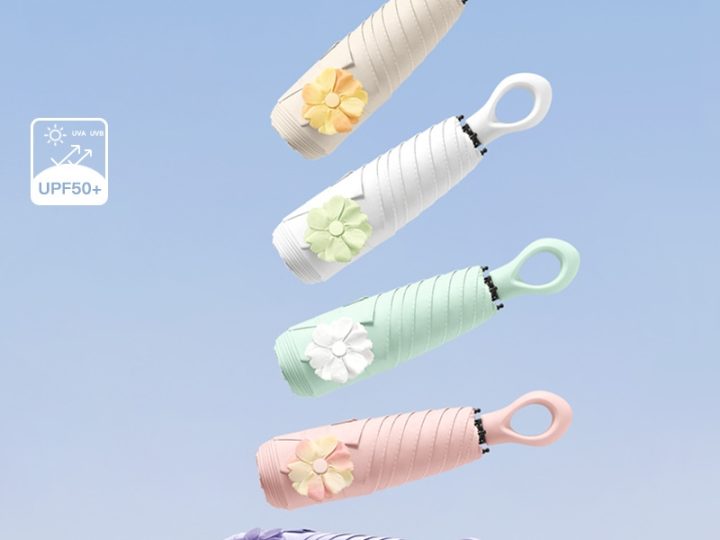
| Entry promotional product | Wholesale compact umbrella category | 6-rib five-fold black UV capsule umbrella | A compact stock platform can create a lower-risk market test. | Logo area, mechanism quality, packed size and first-order MOQ. |
| Core business and gift SKU | Wholesale sun umbrella category | 10-rib golden-frame automatic sun umbrella | A UV-coated business umbrella can support corporate and retail gifting. | Coating evidence, handle finish and premium packaging. |
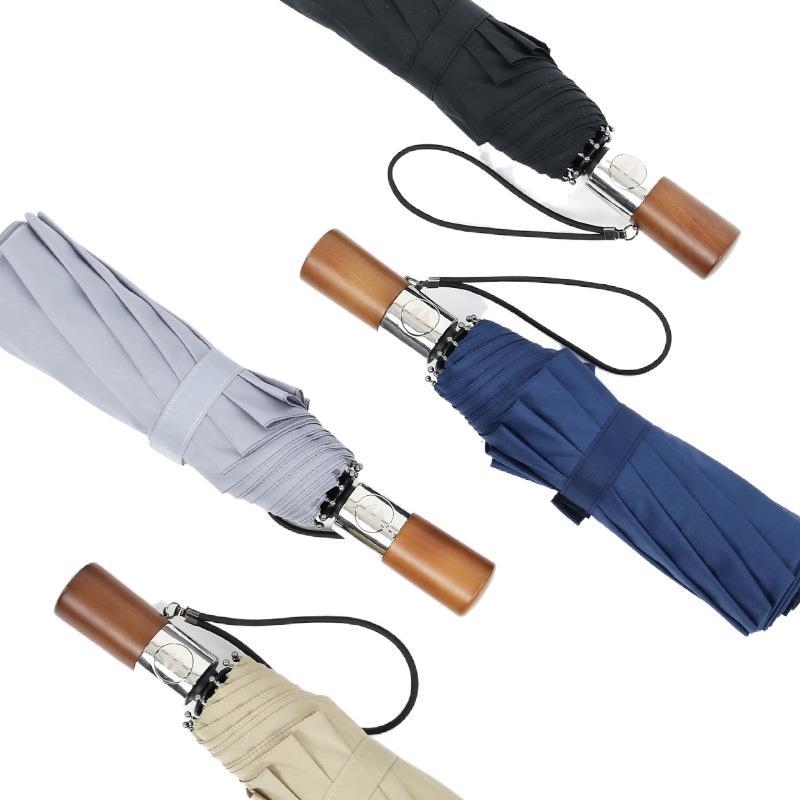
| Rain and commuter hero product | Wholesale rain umbrella category | 16-rib automatic wood-handle folding umbrella | A stronger folding frame can carry the main volume program. | Rib count, wind recovery, shaft and repeat-order consistency. |
| Channel-specific outdoor offer | Wholesale beach umbrella category | double-top garden and beach umbrella | Hotel and outdoor accounts need different poles, bases and carton planning. | Canopy size, anchoring, logo method and spare-part availability. |
The category links are the broad buying paths; the product links are working examples, not the only available models. Confirm current specifications, MOQ and packaging with each quotation.