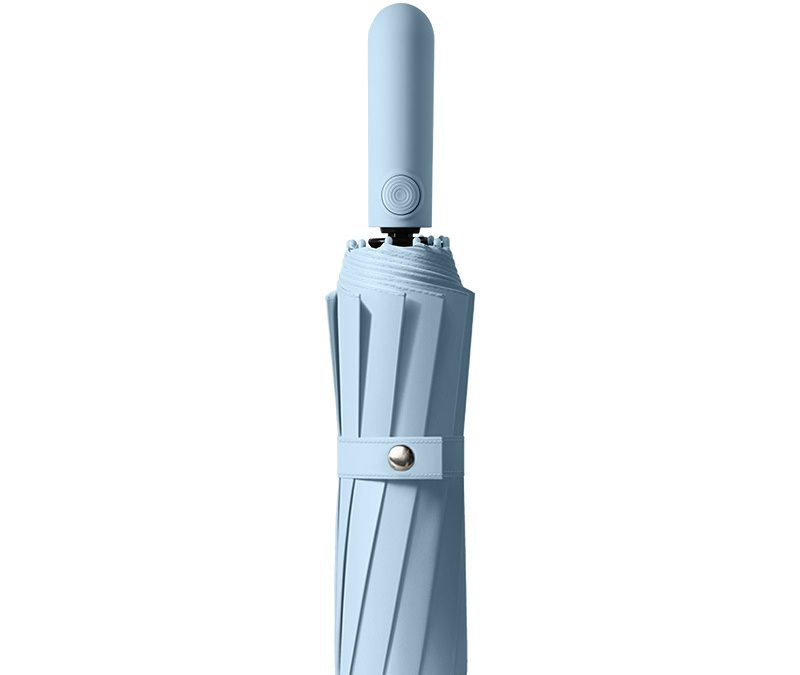
An independent coffee chain wanted a retail umbrella that felt like part of its brand collection rather than a generic promotional giveaway. The product would be sold in selected cafes during a seasonal launch and used as a customer gift for larger purchases. The buyer needed a compact design, controlled brand colours, retail-ready packing, and enough quality for repeat use.
The project combined umbrella development with merchandise planning. Instead of choosing a catalogue model and adding a logo at the end, the team defined the customer journey, sales channel, packaging, and quality standard before approving the frame.
The brief: turn an umbrella into a cafe merchandise product
The chain wanted an umbrella that matched its warm, understated visual identity. A large promotional canopy would have felt too commercial, while a fragile pocket umbrella would not support the retail price or brand position. The ideal product was compact enough for counter display, strong enough for daily commuting, and simple enough to sell without a long explanation.
The buyer also needed consistent units across several locations. Staff had to receive, display, sell, and occasionally gift the umbrella without opening every package. That made carton identification, barcode planning, and a clear retail label as important as the canopy design.
Selecting a compact retail umbrella platform
The project compared three-fold and five-fold compact models. A five-fold design offered a small package, but the higher fold count created more joints and a different opening feel. A three-fold automatic model provided a more familiar user experience, efficient counter display, and a practical balance between folded size and canopy coverage.
The final platform used an aluminium shaft, flexible ribs, a comfortable handle, and a controlled automatic opening action. The buyer reviewed the function of a comparable model before custom colours and artwork were developed. This early decision avoided approving a design around a frame that did not fit the intended retail price or customer use.
For brands comparing similar options, the 5-fold 6K compact umbrella shows how folded size, rib structure, and opening system affect the finished product.
Building a cafe brand palette across fabric and print
The umbrella used a deep green canopy with a warm cream print. The colours had to work on coated fabric, not only on a paper brand guide. The team reviewed a material reference before production and approved the artwork on the actual canopy surface.
The main logo was placed where it remained visible when the umbrella was open and when the product was displayed in its sleeve. Smaller supporting text was kept to a minimum because details can distort across seams and folds. The project followed the approval process outlined in our custom umbrella color matching guide.
Print position, ink coverage, and panel alignment were checked on a physical sample. This prevented a common retail problem: the logo looks correct on a flat digital mockup but shifts or loses contrast when the canopy is tensioned over the frame.
Designing retail packaging for cafe counters
The retail sleeve carried the brand name, product type, colour, and a compact care message. A barcode and SKU area allowed each cafe to process the item through its normal point-of-sale system. The back panel left room for a short brand story and a QR code leading to the wider merchandise collection.
Because the umbrella was displayed next to coffee bags, cups, and gifts, the package had to look intentional rather than like a free promotional item. The team used a clean paper sleeve instead of a large box, which reduced counter space, freight volume, and packaging cost while keeping the presentation premium.
Carton quantity and markings were agreed before production so the same pack could be sent to one warehouse or divided between multiple cafes. Our custom umbrella packaging guide explains how to coordinate sleeves, labels, barcodes, and master cartons.
Sampling the customer experience
The first sample was assessed as a retail product, not only as an umbrella. The team checked opening and closing, handle comfort, canopy tension, rib recovery, fabric appearance, print registration, sleeve fit, and how the product looked when closed.
The approved sample became the reference for colour, artwork, function, and packing. A written specification captured the model, canopy size, fabric, coating, frame, opening system, handle, print method, sleeve, carton, and inspection requirements. The same fields are covered in our umbrella RFQ checklist.
Quality control before retail distribution
Inspection covered the complete sellable unit. Staff checked frame function, canopy appearance, logo position, colour consistency, handle condition, stitching, sleeve print, barcode placement, unit count, and carton condition. Units that did not meet the approved standard were separated before shipment.
The retail team also received a reference photo of the approved package so receiving staff knew what a complete unit should look like. This reduced confusion between promotional stock, retail stock, and replacement units.
The result: a retail product customers can use again
The finished umbrella worked as a branded merchandise item rather than a disposable giveaway. The compact frame, controlled palette, durable canopy, and retail-ready sleeve made it suitable for cafe counters, seasonal gifting, and online merchandise orders. The buyer also gained a repeatable specification that can be adapted for future colours or collaborations.
What other retail brands can learn
Start with the sales environment and customer use. Decide whether the umbrella is a gift, a low-price impulse item, or a premium retail product, because that choice changes the frame, fabric, print, packaging, and quality control level. Keep the first range focused on one or two colours, approve the physical sample, and confirm the carton plan before production.
For a comparable program, review the custom logo business umbrella or start a tailored project through our OEM custom umbrella process.