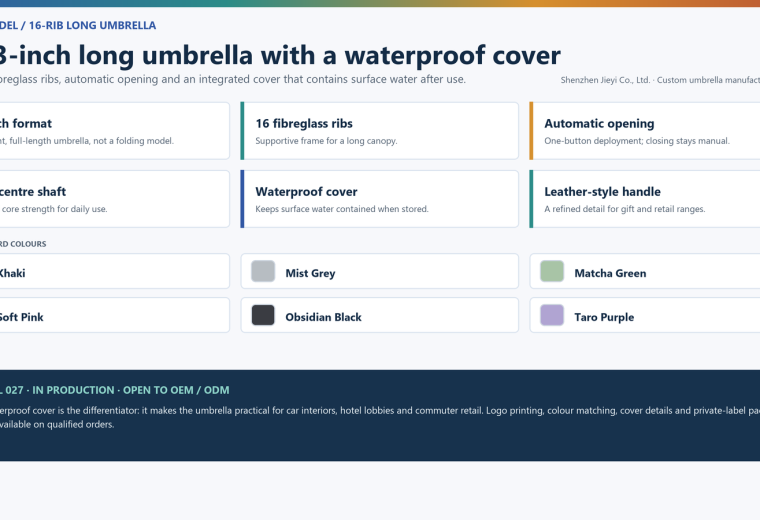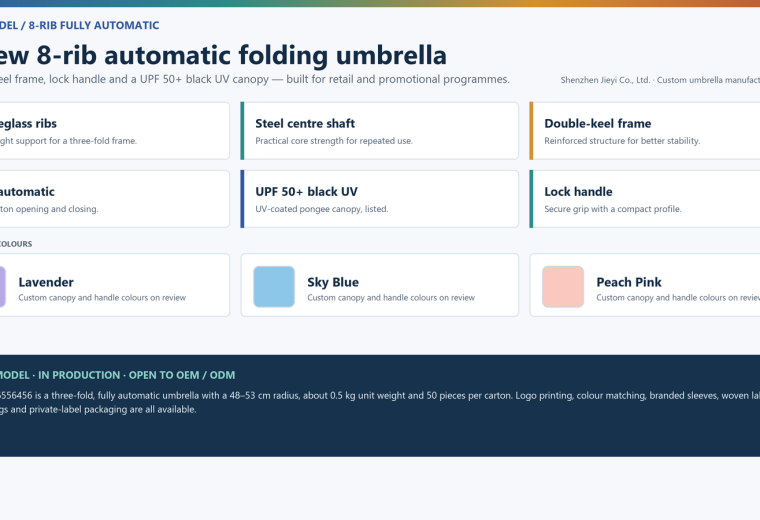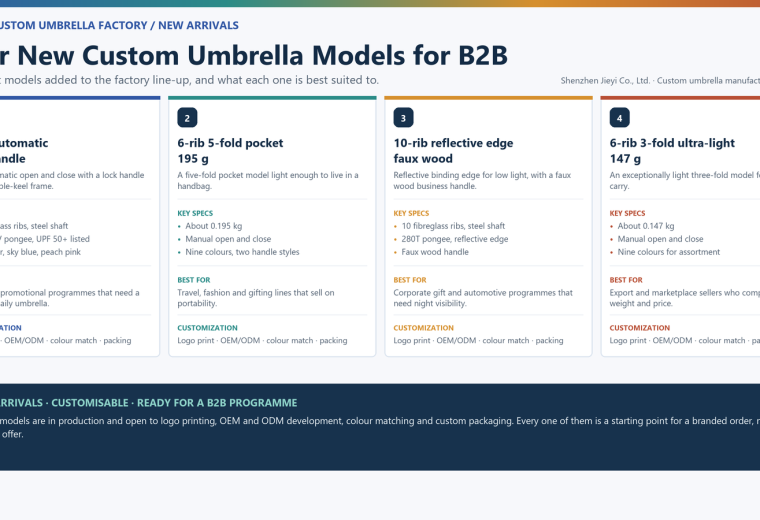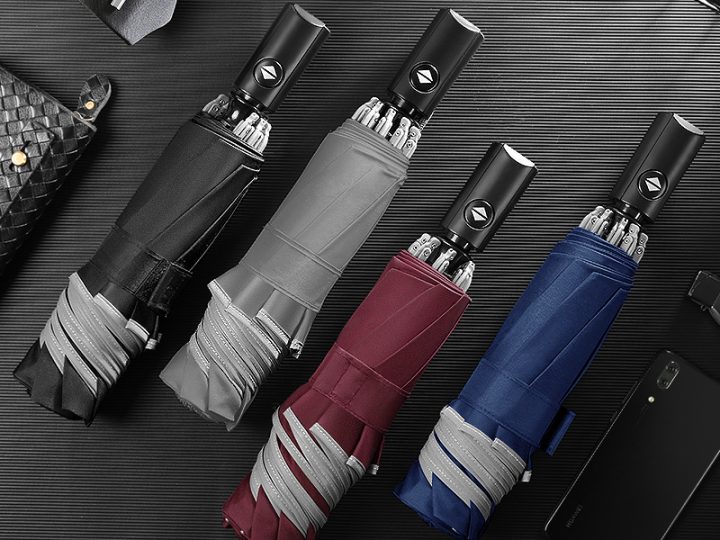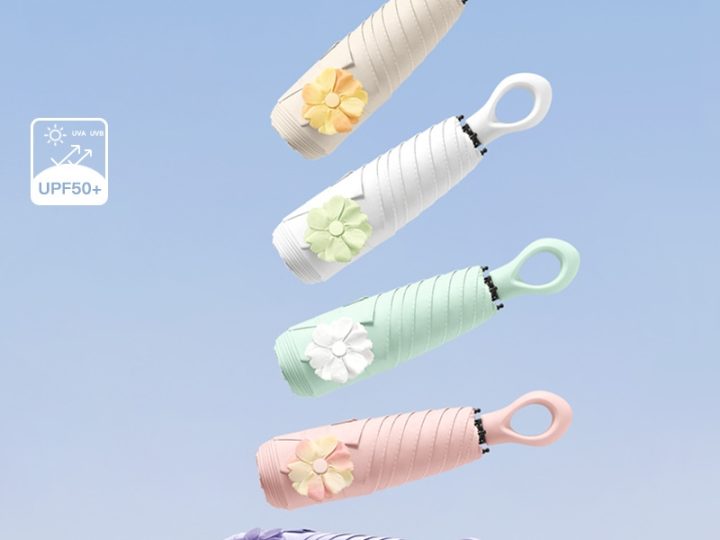
Quick answer: new umbrella product development in a factory follows a controlled path from product brief and concept to feasibility, prototype, testing, pilot production, and final production release. The factory must define the frame, canopy, mechanism, handle, branding, packaging, MOQ, and performance requirements before tooling or bulk materials are committed.
A strong project translates a commercial idea into components that can be sourced, assembled, tested, and repeated.
Step 1: define the new product brief
Development begins with the user, market, price position, and sales channel. A travel retail umbrella needs a different folded size and opening feel from a premium hotel umbrella or a promotional event model. The brief should explain who will use the product, where it will be sold, what problem it solves, and what the buyer expects to spend.
At this stage, the factory also needs target quantity, delivery window, packaging direction, logo files, colour references, and any performance claims. A written brief prevents the team from developing a technically interesting product that does not fit the commercial plan.
Use the umbrella RFQ checklist as a starting framework, then add the new features that make the product different.
Step 2: concept and factory feasibility review
The factory reviews the concept against available frames, mechanisms, canopy patterns, handle options, and packaging formats. The goal is to identify which parts can use proven platforms and which parts require new tooling or supplier development.
A shorter development path usually uses an existing frame with a new canopy, colour, handle, or print. A fully new mechanism or unusual canopy shape takes longer because dimensions, tolerances, and safety need to be validated.
The feasibility review should produce a bill of materials, preliminary cost direction, estimated MOQ, tooling requirement, and risk list. Review our OEM custom umbrella process for the relationship between adaptation and new development.
Step 3: define the frame and opening mechanism
The frame determines the product feel. Rib count, rib material, shaft, runner, spring, and handle must work with the canopy size and opening system. A compact model may prioritise folded length, while a wide model may prioritise shaft strength and canopy tension.
For a new product, the factory should create a frame drawing or specification rather than relying on verbal descriptions. Critical dimensions, component materials, plating or coating, and acceptable tolerances should be documented before a prototype is built.
Step 4: develop the canopy, colour, and print
The canopy connects the visual identity to the product structure. Panel shape, fabric, coating, print method, and seam positions must be reviewed together. A design that works on a flat screen may break across a seam or lose contrast after coating.
Approve colours on the actual fabric and test the artwork on a physical canopy. Our custom umbrella color matching guide explains lab dips, lighting, tolerance, and production approval.
Step 5: build the first prototype
The first prototype should represent the intended materials and mechanism as closely as practical. It is used to assess opening and closing, balance, weight, canopy tension, handle comfort, folded size, stitching, print position, and overall appearance.
Step 6: test the new umbrella
Testing depends on the product claim and market. It may include water repellency, colourfastness, UV protection, rib recovery, wind response, opening cycles, handle strength, or packaging protection. The test method and acceptance criteria should be defined before testing begins.
If the product uses a new mechanism, repeated opening and closing tests are essential. A prototype that works once is not enough. Inspectors should look for runner alignment, spring fatigue, joint wear, canopy distortion, and changes in opening force.
The umbrella quality control checklist can be adapted into a development test plan.
Step 7: refine the sample and approve the production standard
After testing, the factory revises the prototype and produces a second sample if needed. The final approved sample becomes the reference for materials, colour, print, function, packaging, and inspection.
Record the sample ID, material references, component sources, approval date, and any allowed tolerances. The physical sample remains the production standard.
Step 8: pilot production
A pilot run checks whether the new product can be made repeatedly, not just expertly assembled once. It reveals cutting yield, assembly time, fixture needs, print registration, folding method, and packing requirements.
Pilot output should be inspected against the approved sample. Any changes to materials, dimensions, or process must be documented and approved before bulk production.
Our guide to what happens inside an umbrella factory explains how pilot learning connects to cutting, assembly, and final QC.
Step 9: tooling, MOQ, and cost release
New tooling and custom components may require a minimum order or development charge. The buyer should understand which costs are one-time, which are included in unit price, and which are affected by quantity.
The approved product specification should be issued with the purchase order. It should define the exact model, materials, colours, print, packaging, labelling, carton, inspection level, lead time, and shipping term.
Step 10: launch and post-launch review
After delivery, review sales feedback, returns, customer questions, and any performance issue. A successful first run creates a controlled platform for future colours, sizes, or retail editions. A problem found after launch should be traced back to the specification and production record.
The factory and buyer should agree who owns future changes and how a new version will be approved. This prevents old and new components from being mixed in later orders.
What makes a new umbrella factory project successful
- A clear product brief with market and quantity information.
- A factory that can explain feasibility before quoting.
- A documented frame, canopy, mechanism, and packaging specification.
- Physical prototypes and defined performance tests.
- Pilot production before bulk manufacturing.
- Written approval for every material or process change.
Conclusion
New umbrella product development is both creative and operational. The idea matters, but the factory process determines whether it can be made consistently at the right cost. Buyers should treat each prototype, test, and pilot run as a step toward a repeatable production standard.
For a factory-led development program, review the factory profile, see a related project in our new umbrella product development case study, and use the OEM custom umbrella process to connect concept, prototype, testing, and bulk production.
Frequently asked questions
How long does new umbrella product development take?
It depends on whether the project uses a stock frame or requires new tooling. A modified stock platform with a printed canopy can move from brief to approved sample in a few weeks, while a new frame, mechanism, or handle needs additional tooling and testing. Plan the development and bulk-production timelines separately.
What information should be in the new umbrella brief?
Include the target market, price position, intended use, canopy size, frame and opening mechanism, fabric and colour direction, branding, packaging, target quantity, and required launch date. The clearer the brief, the fewer sample revisions are needed.
How many samples are needed before bulk production?
Most projects need at least one prototype and one production-representative sample. Complex products may require several rounds to confirm the frame, canopy, print, and finish. The final sample should match the intended production materials and process as closely as possible.
What tests should a new umbrella pass?
Test opening and closing, runner and spring movement, rib recovery, canopy tension, wind behaviour, water repellency, colour and print appearance, handle stability, and packaging protection. For sun umbrellas, verify the UV claim on the actual fabric.
When should tooling and MOQ be confirmed?
Confirm tooling, MOQ, and cost after the concept and prototype prove the product is feasible, but before pilot production. Locking cost too early can hide tooling or component changes that appear during testing.
How do we move from prototype to bulk production safely?
Approve a production-representative sample, run a pilot batch, and inspect it against the approved standard. Release bulk production only after the pilot confirms the frame, canopy, printing, and packaging can be repeated consistently.
Still at the idea stage? Browse new umbrella product ideas for B2B buyers before locking a specification.
Move from concept to an approved sample
A new umbrella development process needs defined approval gates: commercial brief, platform selection, prototype, functional testing, production-representative sample, pilot batch and production release. Documenting each gate prevents a change in one component from invalidating the sample or the quotation.
Continue with the connected development resources: