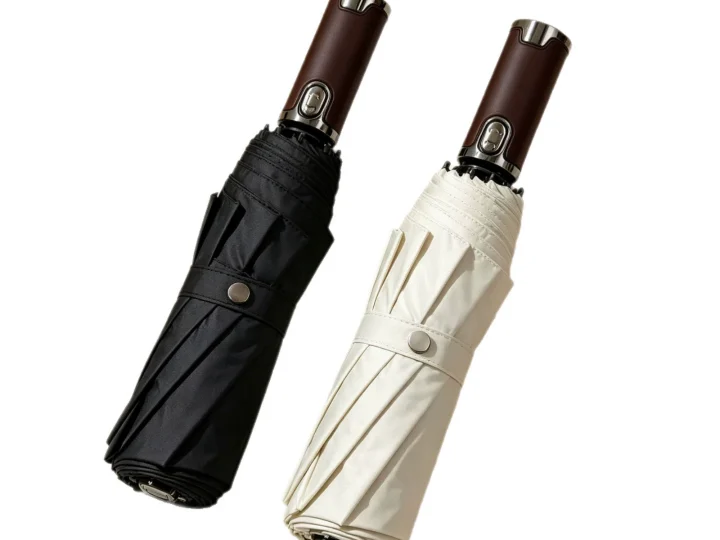
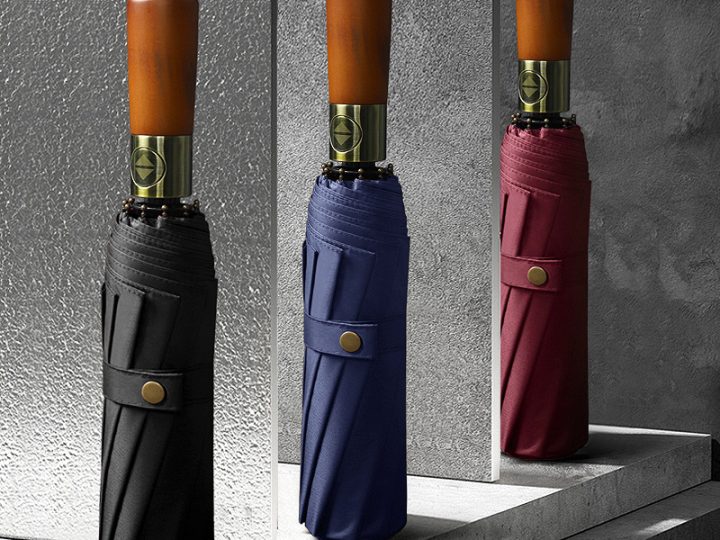
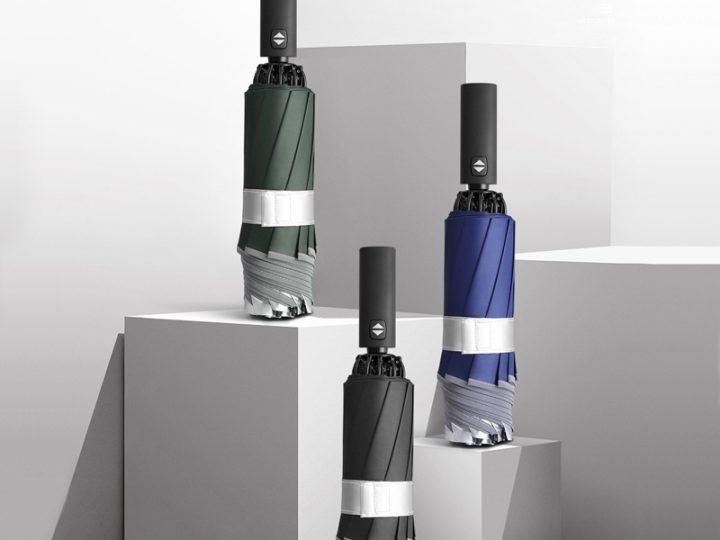
Quick answer: an umbrella works when the runner moves up the shaft, pushing the stretchers outward and lifting the ribs so the canopy opens under tension. The runner locks into place, and the spring or automatic mechanism keeps the frame secure until the user closes it.
Umbrella mechanism at a glance
The canopy opens through a short mechanical chain. The runner moves along the shaft, the stretchers push the ribs outward, and the canopy stretches under tension. The locking point holds the frame open until the user releases it.
Runner moves up
The sliding collar travels along the shaft.
Stretchers push out
Short supports transfer movement to the ribs.
Ribs tension canopy
The ribs spread and stretch the canopy fabric.
Mechanism locks
The runner locks and keeps the frame open.
Manual, automatic or reverse: quick comparison
| Mechanism | How it opens | How it closes | Typical buyer route |
|---|---|---|---|
| Manual | User pushes the runner up. | Runner is released and pulled down. | Compact umbrella category for light, simple programs. |
| Auto-open | Button releases the spring-loaded runner. | Canopy is normally pulled down or reset manually. | Sun umbrella category for commuting and business gifts. |
| Auto-open/close | Button opens the canopy. | Button collapses it; the shaft may still need resetting. | Rain umbrella category for premium commuting. |
| Reverse | Automatic or manual depending on the model. | Wet canopy folds inward. | Rain umbrella category for car, hotel and travel use. |
| Outdoor shade | Push-up, crank or other model-specific control. | Dependent on frame and control type. | Beach umbrella category for hotel and outdoor projects. |
Buyer rule: compare the mechanism with the selling channel, canopy size, handle and target price. Do not describe a model as fully automatic until the sample operation and written specification agree.
How does an umbrella work?
Every traditional umbrella uses the same basic mechanical relationship between the shaft, runner, stretchers, and ribs. When the runner slides upward, the stretchers push the ribs outward. The canopy fabric is attached to the ribs and stretches as the frame opens. When the runner locks, the canopy stays under tension and forms the weather-resistant cover.
How does an umbrella work step by step?
- The user pushes the runner upward or releases an automatic spring that moves it.
- The runner pushes the short stretchers outward.
- The stretchers pivot the ribs away from the shaft.
- The ribs spread the canopy and put the fabric under tension.
- The runner locks in the open position; closing reverses the sequence and releases the tension.
If the runner does not lock, the canopy may look open but remain unstable in wind. If the ribs do not spread evenly, the problem is often a bent rib, a tight rib pocket or a runner that is not travelling squarely along the shaft.
What happens inside an automatic umbrella?
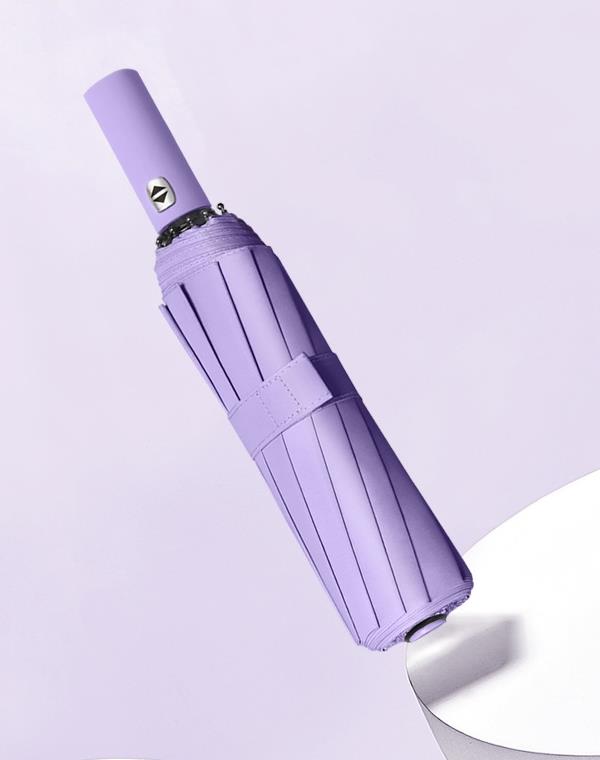
An automatic model stores energy in a spring and releases it when the button is pressed. The spring moves the runner or an internal mechanism along the shaft. That movement is transferred through the stretchers to the ribs. The canopy opens quickly because the frame is designed to follow one controlled sequence.
On an auto-open umbrella, the user often still has to reset the shaft or pull the runner down manually. On an auto-open and auto-close model, the closing button releases the canopy tension, but the shaft may also need to be pushed back before the umbrella can be stored. Buyers should describe the exact operation on the quotation and demonstrate it on the approval sample.
Mechanism problems wholesale buyers should catch
A runner that feels loose or gritty. Open and close the sample repeatedly and watch whether the runner stays aligned. A runner that binds can wear the shaft finish and make the umbrella difficult to close.
A canopy that opens but stays slack. Check whether all ribs extend evenly and whether the canopy tension matches the approved sample. A tight seam or misaligned rib pocket can make a sound mechanism look defective.
A spring that releases too abruptly. Confirm the opening action with the intended canopy size and handle. A stronger spring may be unnecessary or uncomfortable in a compact model.
Different operation after the canopy is wet. Wet fabric changes weight and folding resistance. Test the mechanism after the canopy has been opened, wetted and folded, not only on a dry showroom sample.
The main parts of an umbrella
- Shaft: the central pole that connects the handle to the canopy hub.
- Runner: the sliding collar that moves up and down the shaft.
- Stretchers: the short supports that push the ribs outward.
- Ribs: the flexible arms that support and tension the canopy.
- Canopy: the fabric surface that repels rain, blocks UV, or provides both functions.
- Spring and locking mechanism: the parts that hold the umbrella open or controlled during opening and closing.
Manual umbrella mechanism
A manual umbrella requires the user to push the runner up until it locks. Closing requires releasing the runner and pulling the canopy down. Manual systems are simple, lightweight, and generally lower in cost. They suit promotional umbrellas, budget retail programs, and buyers who want fewer mechanical parts.
Automatic opening umbrella
An auto-open umbrella uses a spring-loaded shaft and a button. Pressing the button releases the runner, which opens the canopy automatically. The user still needs to pull the runner down to close the umbrella. This system is common in business, retail, and corporate gift umbrellas.
Automatic open and close umbrella
An auto-open and auto-close umbrella adds a second mechanism for closing. Pressing the button collapses the canopy, but the shaft often still needs to be pushed back down manually before storage. This format is popular for commuting, travel retail, and higher-value gift programs because it offers faster one-hand operation.
Reverse folding umbrella mechanism
A reverse umbrella folds with the wet canopy inside. The frame is designed so the closed umbrella turns inside out rather than collapsing in the conventional direction. This reduces dripping when entering a car, hotel, or store, and creates a clear premium feature for retail and corporate gifts.
Compare umbrella opening systems
| Type | Opening | Closing | Buyer position |
|---|---|---|---|
| Manual | Manual | Manual | Promotional and value programs |
| Auto open | Button | Manual pull-down | Business and gift umbrellas |
| Auto open/close | Button | Button plus shaft reset | Premium commuting and retail |
| Reverse | Automatic or manual variants | Wet canopy folds inward | Premium travel, car, and hotel programs |
What wholesale buyers should check
- Test the opening and closing action repeatedly, not only once.
- Check whether the runner locks securely and releases smoothly.
- Confirm the spring, shaft, and runner material rather than judging only the canopy.
- Review the frame tolerance after opening and closing at least 50–100 times on a sample.
- Ask how the mechanism performs in wind and after the canopy becomes wet.
- Confirm that the selected mechanism matches the target retail price and warranty position.
How to open and close an umbrella safely
- Point the umbrella away from your face and other people.
- Press the button or push the runner upward until it locks.
- Check that all ribs are fully extended before using the umbrella in wind.
- To close an automatic umbrella, press the button and allow the canopy to collapse.
- Push the shaft down and secure the strap or sleeve before storage.
Which umbrella opening system should you choose?
Choose manual when cost and weight are the main priorities. Choose auto-open for corporate and business umbrellas. Choose auto-open and auto-close for commuting and premium retail. Choose a reverse format when the product needs a distinctive travel benefit and the budget supports a more complex frame.
Related products and next steps
Review the reverse automatic rain umbrella, compare the auto-open wooden handle umbrella, or explore the 23-inch automatic folding umbrella.
For a lighter sun and travel format, see the 6-rib super light folding umbrella. Buyers comparing canopy structures should also read Double Canopy vs Single Canopy Umbrella and the umbrella QC and import checklist.
To discuss a custom opening system, send the target price, quantity, handle preference, canopy size, and market requirements through the OEM Custom page.
Choose the umbrella category with the opening system
The opening mechanism should be selected together with the product category, intended user and selling channel. A mechanism that feels convenient in a compact commuter umbrella may be unsuitable for a hotel beach umbrella, and a simple manual frame may be the better commercial choice for a low-price promotion.
| Buyer use | Product category | Indexed product example | Why it fits | Confirm before quoting |
|---|---|---|---|---|
| Travel and everyday compact carry | Wholesale compact umbrella category | 6-rib five-fold black UV capsule umbrella | Five-fold and three-fold frames suit handbags, commuter retail and light gift programs. | Folded length, weight, runner effort and hinge count. |
| Sun and city commuting | Wholesale sun umbrella category | 10-rib golden-frame automatic sun umbrella | UV-coated folding models bridge sun protection, business gifting and retail use. | Coating evidence, canopy colour and automatic mechanism. |
| Rain, business and long-handle programs | Wholesale rain umbrella category | 16-rib automatic wood-handle folding umbrella | Larger folding and long-handle frames support stronger shafts and broader corporate use. | Rib count, shaft stability, wind recovery and operating force. |
| Hotel, resort and outdoor shade | Wholesale beach umbrella category | double-top garden and beach umbrella | Beach and garden frames use different pole, venting, tilt and base requirements. | Canopy size, frame finish, anchoring, logo placement and carton volume. |
The category links are the broad buying paths; the product links are working examples, not the only available models. Confirm current specifications, MOQ and packaging with each quotation.
Opening-system checks for a production sample
- Open and close the umbrella repeatedly and record any hesitation, sticking or abnormal noise.
- Confirm whether the runner locks fully and whether the canopy is tensioned evenly.
- Check the spring, shaft, runner and handle attachment as one assembly.
- Test the product with the final canopy weight, handle and packaging, not only a display mockup.
- Confirm the operating instructions and product wording match the exact mechanism supplied.
For the next import and QC step, use the umbrella import, QC and carton checklist.
Frequently asked questions
How does the runner make an umbrella open?
The runner slides up the shaft and pushes the stretchers outward. The stretchers lift the ribs and tension the canopy; the runner then locks so the frame remains open.
What is the difference between auto-open and auto-open/close?
An auto-open umbrella opens with a button but is usually reset or pulled down manually. An auto-open and auto-close mechanism also releases the canopy with a button, although the shaft often still needs to be reset before storage.
Is a reverse umbrella stronger than a standard umbrella?
Reverse describes how the canopy folds, not a guaranteed strength rating. Wind performance still depends on the frame, ribs, shaft, canopy tension and overall construction, so the final mechanism must be checked on a sample.
Which opening system is best for a wholesale gift umbrella?
Auto-open is common for business and gift umbrellas, while auto-open and auto-close suits higher-value commuting and retail programs. Manual systems remain suitable for cost-controlled promotions and lighter products.
How should buyers test an umbrella opening system?
Open and close the sample repeatedly, checking runner movement, locking, canopy tension, hinge alignment and handle attachment. Test the exact canopy, handle and mechanism planned for production.