Quick answer: a promotional umbrella supplier should be selected on more than unit price. Distributors need a supplier that can quote quickly, produce consistent decoration, handle several customer briefs, protect delivery dates, pack for onward shipping, and support repeat orders without rebuilding the specification each time.
Promotional distributors often buy for many end clients rather than for one brand. The product mix may include folding umbrellas, long-handle umbrellas, golf umbrellas, compact travel models, and corporate gift packaging. This guide gives distributors a ten-point supplier checklist and a practical way to compare quotations.
Why distributor sourcing is different
A direct brand buyer can often freeze one product specification and place a planned seasonal order. A promotional distributor may receive requests from several customers in the same month, each with a different logo, colour, quantity, deadline, and delivery address. The supplier must be able to separate those requirements while keeping product quality and production control consistent.
The best supplier is therefore not only the one with the lowest price for one order. It is the one that can provide a useful product range, respond to artwork questions, explain available decoration methods, quote a repeatable specification, and communicate clearly when a customer changes the quantity or deadline.
1. Review the supplier’s product range and model repeatability
Ask whether the supplier offers a stable range of stock structures and a route to modified or fully custom products. A distributor benefits from models that can be ordered again with the same frame, canopy, mechanism, handle, and packing specification.
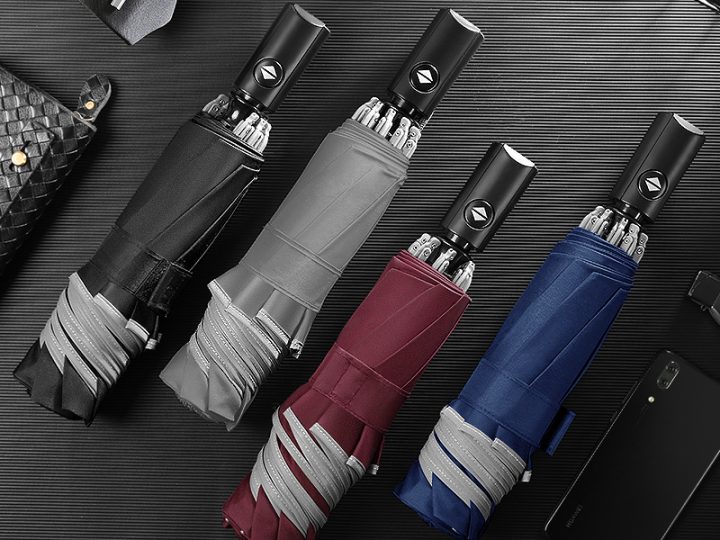
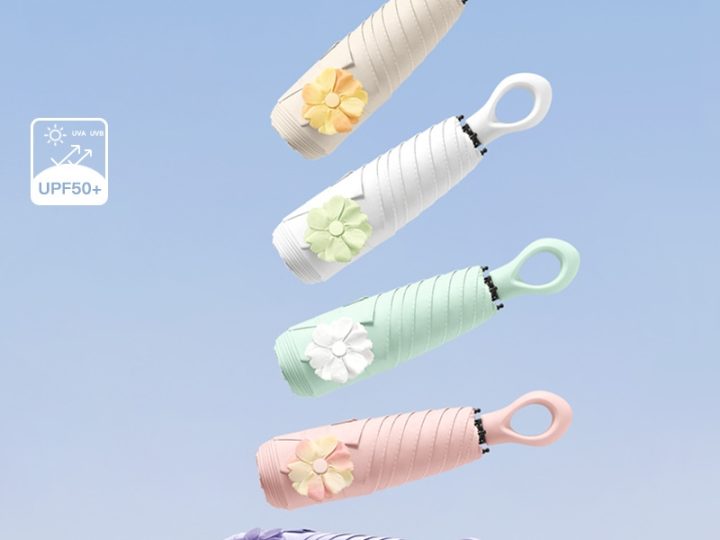
Browse the umbrella product collection and compare folding, long-handle, golf, and compact models. A useful supplier should be able to explain which models are best for quick promotional programs and which are more suitable for premium retail, hospitality, or private-label work.
2. Confirm decoration methods and artwork handling
Promotional orders often depend on logo reproduction. Ask which decoration methods the supplier uses for the proposed fabric, how artwork is prepared, how many colours can be printed, and what the buyer must approve before production. Screen printing, heat transfer, and digital decoration have different strengths and setup considerations.
Request a placement drawing and a physical decoration sample for important programs. Check the logo at the actual viewing distance, not only as a flat digital mockup. Fine lines, small text, gradients, and light colours may behave differently on a coated canopy and across seams.
The supplier should have a clear artwork checklist covering file format, Pantone references, logo size, print position, repetition, and approval. For colour-sensitive work, connect decoration approval with the fabric colour decision rather than treating canopy colour and print colour as separate approvals.
3. Decide between stock, modified, and fully custom models
Not every client needs a new umbrella structure. Stock models are useful for fast promotional programs, modified stock models can add a specific colour, logo, handle, or packaging, and fully custom OEM models make sense when the product must be differentiated or repeated as a private-label range.
Ask the supplier to identify the minimum change that solves the customer’s requirement. A distributor who understands this hierarchy can protect margin, reduce sampling time, and avoid creating tooling or setup costs that the end client does not need. The OEM custom umbrella process is a useful reference when a program moves beyond standard decoration.
4. Test the sampling and approval workflow
A supplier may offer samples, but speed and clarity matter. Ask how long a sample takes after artwork and specification approval, what it includes, whether the fee is refundable or credited, and how revisions are handled. A useful sample should represent the proposed fabric, frame, print, handle, and packaging.
Create a written approval record for every customer program. It should show the model, logo file, print placement, colours, quantity, packaging, delivery date, and approved deviations. This record prevents a repeat order from being judged against a different sample or an old chat message.
5. Understand MOQ and order planning
MOQ is not a single number. It can change with the frame, canopy colour, printing method, handle, packaging, and number of variants. Ask which components create the minimum and whether a stock model can be used for a smaller test order.
For a distributor, order planning should also consider how many customer orders can be combined. A supplier may be able to group compatible products or share a material run, but this must be discussed before quotation. Do not assume that combining orders automatically reduces price or lead time.
6. Review lead time and seasonal capacity
Request the sample lead time, production lead time, inspection window, packing time, and shipping cut-off separately. A total lead time hides the points where delays occur. Ask what happens during peak promotional seasons, public holidays, or periods when a specific fabric or component is in short supply.
A distributor selling to event organizers, retailers, or corporate clients may have fixed delivery dates that cannot move. The supplier should be able to state realistic cut-offs and explain what information is required to reserve capacity.
7. Ask how quality control works
Quality control should match the product and the customer’s expectations. For umbrellas, inspection may include canopy dimensions, fabric appearance, colour, frame alignment, runner movement, opening and closing, handle fit, logo placement, accessories, and packed carton details.
Ask how the supplier records defects, who approves rework, what evidence is provided before shipment, and how a claim is investigated after delivery. The umbrella quality control checklist can be used to compare suppliers with a consistent set of questions.
8. Evaluate packaging for onward distribution
Promotional distributors may ship to one customer, split an order across several addresses, or store units for later fulfilment. The packaging plan should therefore cover individual unit protection, inner packs, labels, barcodes, master carton strength, carton marks, and the unit count that makes warehouse handling practical.
Confirm whether the supplier can provide branded sleeves, gift boxes, hang tags, or carton labels and whether those items affect the production lead time. Ask for final packed dimensions and weights before quoting freight to the end customer.
9. Compare commercial terms line by line
A promotional umbrella quote should separate unit price, logo setup, sample charge, tooling, packaging, inspection, inland transport, and shipping terms. It should also state the quotation validity, payment schedule, currency, and what happens when the quantity or artwork changes.
When comparing suppliers, use the same specification and quantity. A low price based on a lighter fabric, a simpler frame, fewer print colours, or a different carton may not be comparable with a more complete offer. Ask each supplier to confirm the assumptions behind the number.
10. Check communication, documentation, and repeat-order support
A distributor needs a supplier who can answer technical questions, provide consistent documents, and keep the approved specification available for future orders. Ask who will manage the account, how quickly normal questions are answered, and how changes are documented.
Repeat-order support matters more than a single successful shipment. A supplier that can retrieve the previous specification, artwork, packing details, and inspection criteria will reduce the risk of colour, size, or packaging differences in the next order. Use the same questions consistently when comparing suppliers, so the final decision is based on evidence rather than sales presentation.
Distributor supplier scorecard
| Selection area | Evidence to request | Why it matters |
|---|---|---|
| Product range | Stable models, options, and relevant product examples | Supports different client briefs without starting from zero |
| Decoration | Method, placement drawing, and physical print sample | Protects logo quality and customer approval |
| Sampling | Timeline, revision process, and written approval record | Reduces mismatch between sample and bulk order |
| Lead time | Stage-by-stage schedule and peak-season capacity | Protects fixed customer delivery dates |
| Quality control | Inspection plan, records, and claim process | Makes supplier performance comparable |
| Commercial terms | Itemized quote, MOQ, payment, and change policy | Prevents hidden costs and scope confusion |
| Repeat support | Stored specification and artwork control | Improves consistency for future orders |
Common promotional supplier selection mistakes
- Comparing quotations with different fabrics, frames, print methods, or carton counts.
- Choosing a supplier only because the first sample is fast or inexpensive.
- Approving artwork without checking the final print size and position.
- Assuming a stock image represents the exact production model.
- Leaving packaging and carton data until after the customer has confirmed the delivery date.
- Failing to record the approved specification for repeat orders.
- Using a supplier that cannot explain what happens when a defect is found.
What to include in a distributor RFQ
Send the product type, target quantity, end-customer market, logo artwork, preferred colours, decoration method, packaging requirement, destination, and required delivery date. Add the expected repeat frequency, because a product intended for one promotion may need different support from a model planned for a year-round catalogue.
If the first order uses a stock model, ask for the closest repeatable configuration. If it requires new materials or tooling, ask for the complete development path before committing to the customer’s selling price. Use one written brief so every supplier quotes the same scope.
Frequently asked questions
What is the most important quality in a promotional umbrella supplier?
Consistency and communication are usually more important than the lowest headline price. The supplier should be able to reproduce the approved product, explain decoration and packaging requirements, and provide evidence before shipment.
Can a distributor order several customer designs together?
It depends on the models, materials, print methods, packaging, and production schedule. Discuss the possibility before quotation and confirm how the supplier will keep colours, artwork, cartons, and delivery addresses separated.
Should a distributor choose a stock or custom umbrella?
Use a stock model when speed and lower setup complexity matter. Consider a modified or custom model when the customer needs a distinct product, a specific colour system, private-label packaging, or a repeatable range.
Conclusion
Selecting a promotional umbrella supplier is a repeatable evaluation process, not a one-time price comparison. Review the product range, decoration capability, sampling method, MOQ, lead time, quality control, packaging, commercial terms, and repeat-order support. A supplier that performs well across those areas gives a distributor more room to serve customers without carrying unnecessary production risk.
Start with the custom umbrella category, compare a repeatable model such as the 10-rib automatic folding umbrella, and use the contact page to discuss a distributor program, artwork, quantity, and delivery market.
Score a promotional umbrella supplier before committing
Compare suppliers on the same commercial and technical basis: product platform, decoration method, sample lead time, MOQ, production capacity, packaging, QC evidence, repeat-order consistency and after-sales response. A supplier that fits one promotional order may not fit a distributor programme that needs multiple SKUs and repeated reorders.
Use these related resources to complete the evaluation: