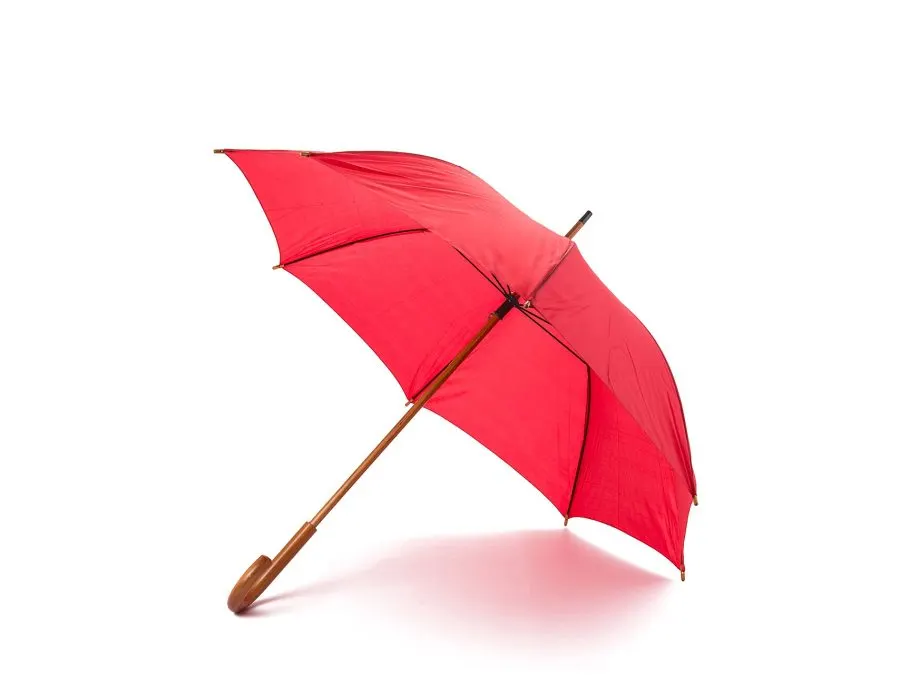
A festival merchandise team needed an umbrella that could carry a bold seasonal identity, survive crowded outdoor use, and fit efficiently into event logistics. The brief was not a standard promotional giveaway. The product had to feel useful after the event, print clearly from a distance, and remain easy to pack, transport, and distribute across several sites.
The project became a specification exercise in balancing visual impact, folded size, frame strength, and packaging. This case study outlines the decisions that shaped the finished custom event umbrella program.
The challenge: make an event umbrella useful, not disposable
Festival visitors may carry an umbrella for several hours in rain, sun, or changing weather. A product with a weak shaft, loose canopy, or uncomfortable handle is quickly left behind. The buyer wanted a promotional umbrella that retained enough quality to be used again after the event. At the same time, the unit had to remain affordable at event volume and easy for staff to handle.
The artwork added another requirement. The main design had to remain recognisable when the umbrella was open, when it was carried in a crowd, and when it appeared in user-generated photos. Fine detail was less important than a strong shape, readable colour contrast, and controlled placement around the canopy panels.
Choosing a compact frame for event distribution
The project compared long, golf, and folding formats. A long umbrella offered the largest print area, but its length created more storage and transport friction. A golf umbrella provided wide coverage, but it was too large for a general event audience. The team selected a compact folding platform with a practical open diameter and a folded length that fit standard sleeves and distribution cartons.
The frame was specified around the user rather than a single component. A lightweight shaft reduces carrying fatigue, while flexible ribs help the canopy recover from ordinary gusts and handling. A positive opening action and comfortable handle matter in wet conditions, when users are moving quickly and wearing a bag or rain jacket.
For comparable programs, buyers can review the lightweight reverse automatic rain umbrella or the wider compact umbrella range before fixing the structure.
Specifying the canopy for bold event artwork
The canopy needed a smooth printable surface, predictable colour reproduction, and enough opacity for the main event colours. Fabric density, coating, and print method were reviewed together because they affect colour depth, drying, fold memory, and water repellency. The artwork was simplified to suit the panel layout, with the primary mark positioned to remain visible when the umbrella was partially open.
Print placement was tested on a physical mockup rather than approved from a flat digital file. The team checked how the logo crossed seams, how contrast changed under daylight, and whether small type remained readable. The final design used a strong canopy graphic supported by a simpler coloured sleeve, which reduced print complexity and kept the event identity coherent.
Packaging and distribution for a multi-site event
Event packaging had to support fast counting, clean presentation, and simple transport. Each umbrella received a fitted sleeve with the event name and a compact information label. Master cartons used a consistent quantity and clear marks so different teams could receive, store, and restock the product without opening every box.
The packaging plan also protected the canopy and handle during transit. Units were prevented from moving inside the carton, and carton dimensions were checked against pallet and venue access. These practical details are often more important than decorative packaging in promotional programs. Our custom umbrella packaging guide explains how to compare sleeves, boxes, labels, and export cartons.
Sample approval before production
A complete sample was reviewed for opening and closing, shaft alignment, rib recovery, canopy tension, stitching, print registration, colour, handle comfort, sleeve fit, and closed appearance. The approved sample became the production standard, including artwork position and packing method.
The buyer also confirmed the order brief in writing before bulk production: umbrella model, open size, folded length, rib structure, fabric, coating, opening system, handle, print method, sleeve, carton quantity, inspection criteria, and delivery schedule. This reduced the risk of a visually correct sample being followed by a production compromise. The same process is covered in our umbrella RFQ checklist.
Quality control at the event-ready stage
Inspection covered the product and packaging as one finished unit. The team checked frame function, canopy appearance, logo position, colour consistency, handle condition, sleeve printing, quantity, and carton marks. Units with damaged tips, loose stitching, print defects, or incomplete packaging were separated before shipment.
For branded programs, the final check should also confirm that the approved artwork matches the bulk order and that no old logo, market-specific label, or previous barcode remains in the packing line.
The result: a practical branded event umbrella
The final program combined a compact user-friendly frame, high-visibility canopy artwork, and efficient packaging. The umbrella worked as event merchandise, weather protection, and a reusable brand item. The buyer gained one controlled specification that could be repeated for future events, while the packaging and carton plan supported distribution across multiple locations.
What other event buyers can apply
Start with the audience and environment, then define the user experience, print scale, folded size, frame quality, and distribution method. A lower unit price is only useful if the umbrella opens reliably, carries the brand clearly, and arrives ready to distribute.
For a similar promotional program, compare the custom logo business umbrella for a business-focused audience or the premium windproof golf umbrella when wider coverage and a stronger sports position are required. Our OEM custom umbrella process explains how artwork, sampling, branding, packaging, and production are coordinated from one brief.