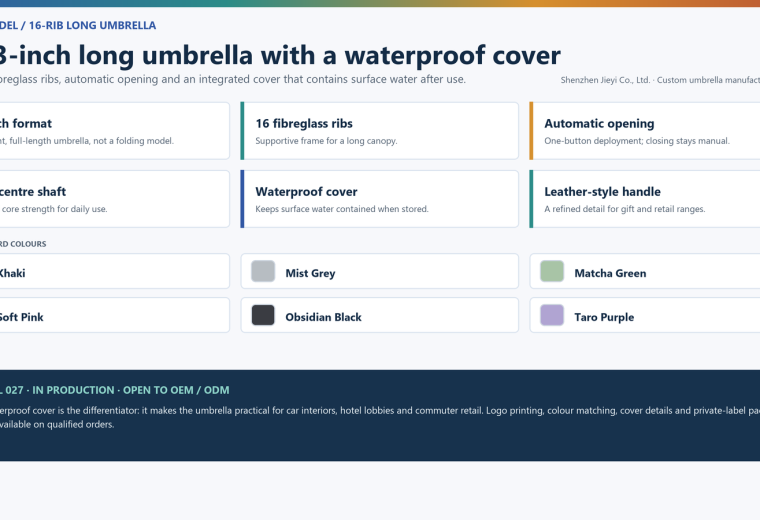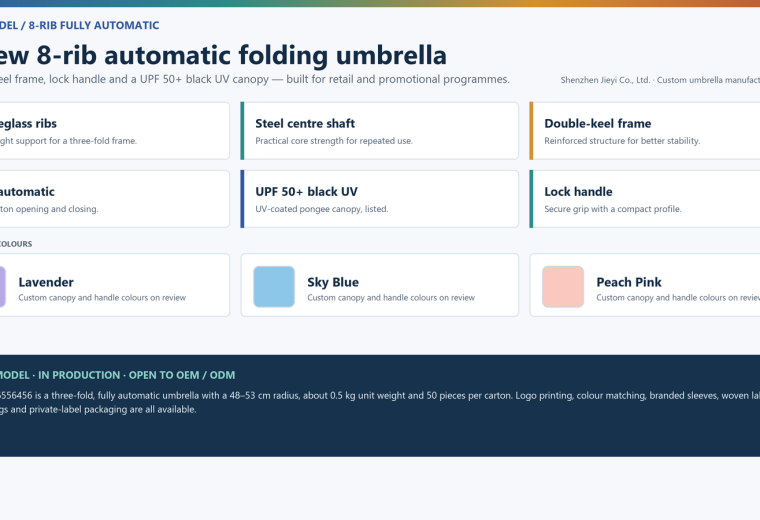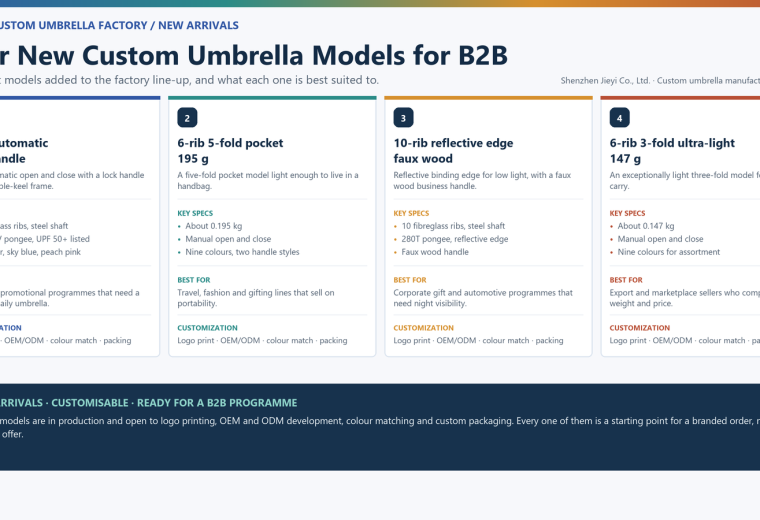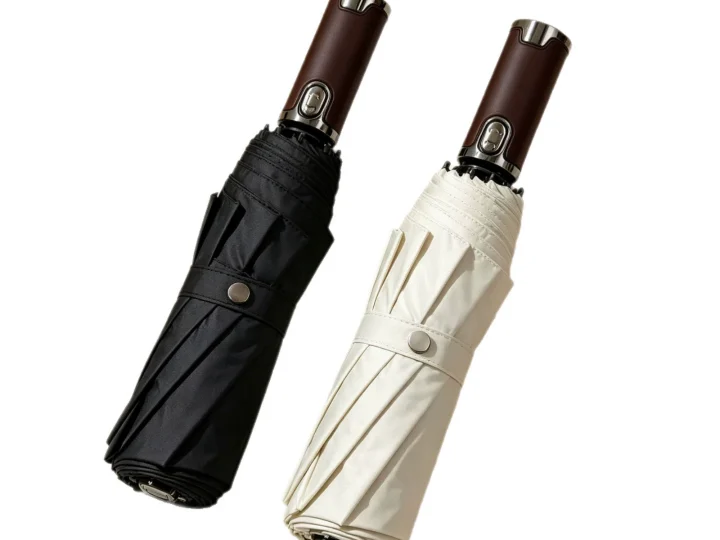
OEM and ODM are often used interchangeably, but they describe different starting points for product development. Choosing the right route depends on how much design control you need and how much development support your supplier should provide.
OEM: build to your specification
An OEM project follows the buyer’s drawings, reference sample, material requirements, colors, logo files, and packaging direction. This approach is suitable when the product must match an established collection or a detailed technical brief.
ODM: develop from a proven platform
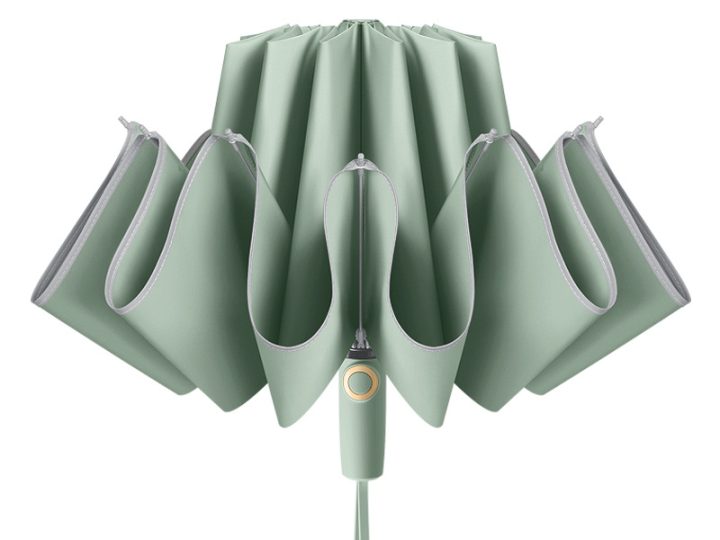
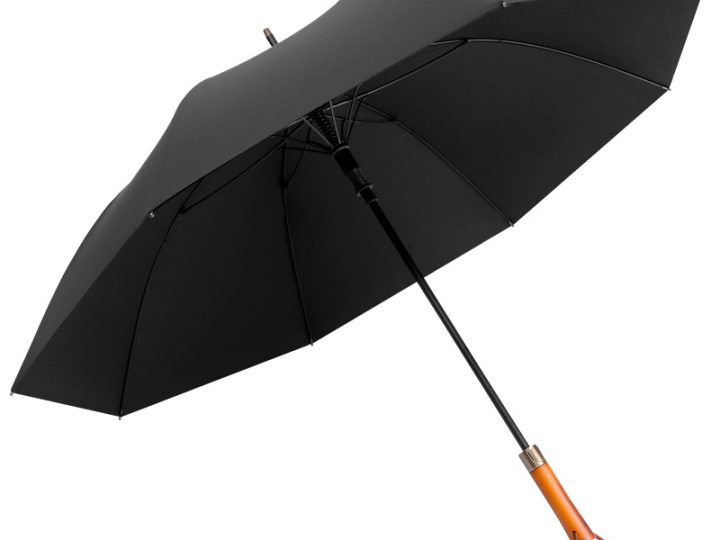
ODM starts from an existing umbrella structure and adapts it to the buyer’s market. The factory can recommend frame, fabric, handle, opening system, branding, and packaging changes. This can shorten development time and reduce uncertainty.
What to prepare
Provide a reference product, target quantity, target cost, launch schedule, artwork, and market position. These inputs help the manufacturer identify the most practical route and flag any specification conflicts early.
Compare total project value
The best decision is not simply the model with the lowest quoted price. Compare sample quality, communication, material consistency, quality control, packaging support, lead time, and the factory’s experience with similar buyers.
Choose the route that protects the launch schedule
ODM development is usually faster because the factory starts from an existing structure, material set, and tooling position. The buyer changes branding, colour, handle, packaging, or selected components within a proven platform. This route suits promotional campaigns, retail private label, hospitality programs, and brands that need a reliable product without creating a new frame.
OEM development makes sense when the product must match a unique structure, a specific user experience, a patent or design direction, or a performance target that cannot be met by an existing model. Expect more drawing, sampling, tooling, testing, and minimum-order commitment because the production platform is being developed for the brief.
Questions that reveal the real development cost
Ask who owns the tooling and artwork, how many sample rounds are included, what happens when a sample fails, whether the production frame matches the approved sample, how component changes are documented, and how repeat orders preserve the specification. The lowest development quotation may create the highest long-term cost if it hides tooling, sampling, or quality-control work.
Review the OEM and ODM customization process, prepare the RFQ details, and compare a production-ready custom logo umbrella platform.