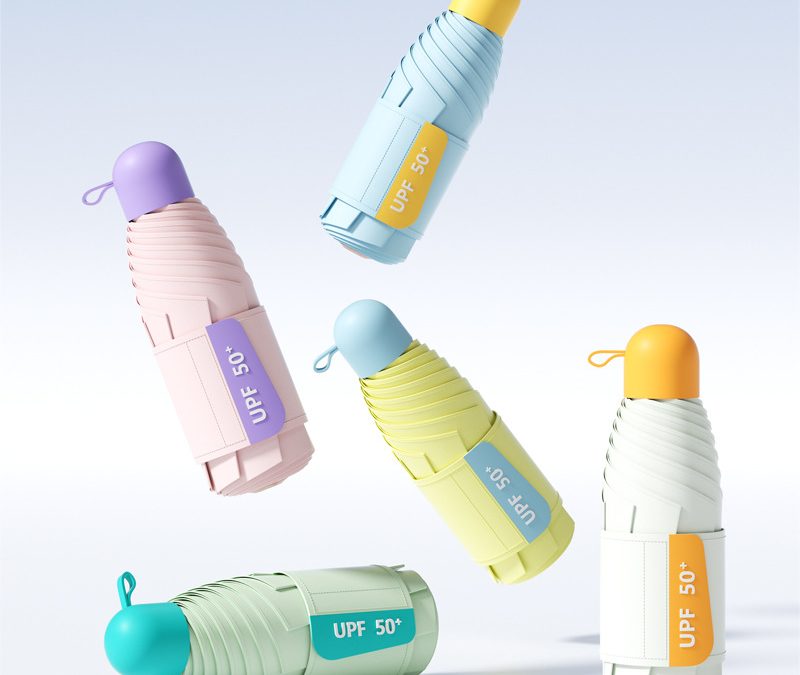
The project began with a limited-edition product launch rather than a traditional wholesale assortment. The buyer wanted a compact umbrella that felt designed for the brand while keeping the first production run manageable.
We focused on an existing automatic folding platform, then customized the canopy, handle, label, and sleeve to create a distinct product without developing a new frame from scratch.
Why the existing platform was the right starting point
A limited release carries the same tooling and sampling cost as a full production run, so the way to keep a small order viable is to build on a proven frame rather than develop a new mechanism. The buyer’s differentiation came from the canopy colour, the handle finish, and the labelling rather than from the frame architecture. Working from a proven automatic folding platform meant the opening system had already been validated through volume production, and the sampling effort could be directed at the parts that actually made the product distinctive.
Using colour as the main differentiator
For a small run, colour is the most cost-effective way to create a product that reads as brand-specific. We worked from the brand palette to define a canopy colour that would hold up in production, then matched the sleeve and label colours so the packaging continued the same tone. Where a colour sits outside the standard range, the achievable match is confirmed on the physical sample, because screen and print references can differ noticeably from the finished coated fabric.
Labels, sleeves, and small-run packaging
Custom labels and compact packaging carry most of the perceived value in a limited release, because the buyer is selling a designed object rather than a utility item. Woven labels, a printed sleeve, and a lower-volume carton configuration were specified together with the umbrella so the finish, the label placement, and the packaging were approved as one presentation rather than three separate decisions at different times.
How the sample was validated
The sample was reviewed for canopy colour accuracy against the brand reference, label position and stitching, opening and closing behaviour, folded size against the sleeve dimensions, and the appearance of the finished product as it would be photographed for the launch. The approved sample was kept as the reference for repeat production.
Related products
Two formats suit this kind of project: the 5-fold 6K compact umbrella for the smallest folded size, and the 23-inch 10-rib automatic folding umbrella where a larger canopy and a lower MOQ matter more. Both are listed under compact umbrella.
How to apply this project to your range
The US project shows how a small-batch umbrella range can still use controlled sampling, custom labels and retail-ready packaging.
Use the project story as a starting point, then adapt the structure, materials, branding and packaging to your quantity, market, price position and delivery date.