A buyer opens a quotation for a 6-rib five-fold capsule umbrella and sees a price that looks high for something so small. The natural reaction is to assume the factory is padding the number. In most cases it is not — the five-fold format is simply the hardest small umbrella to build consistently, and the cost sits in tolerances you cannot see from the outside.
Short answer: if you need an umbrella that fits a handbag, the five-fold capsule is the right format, but budget for tighter QC and a longer sample cycle. If a 22 x 7 x 7 cm closed size is not essential, a three-fold model will cost less and fail less often.
What “five-fold” actually asks the factory to do
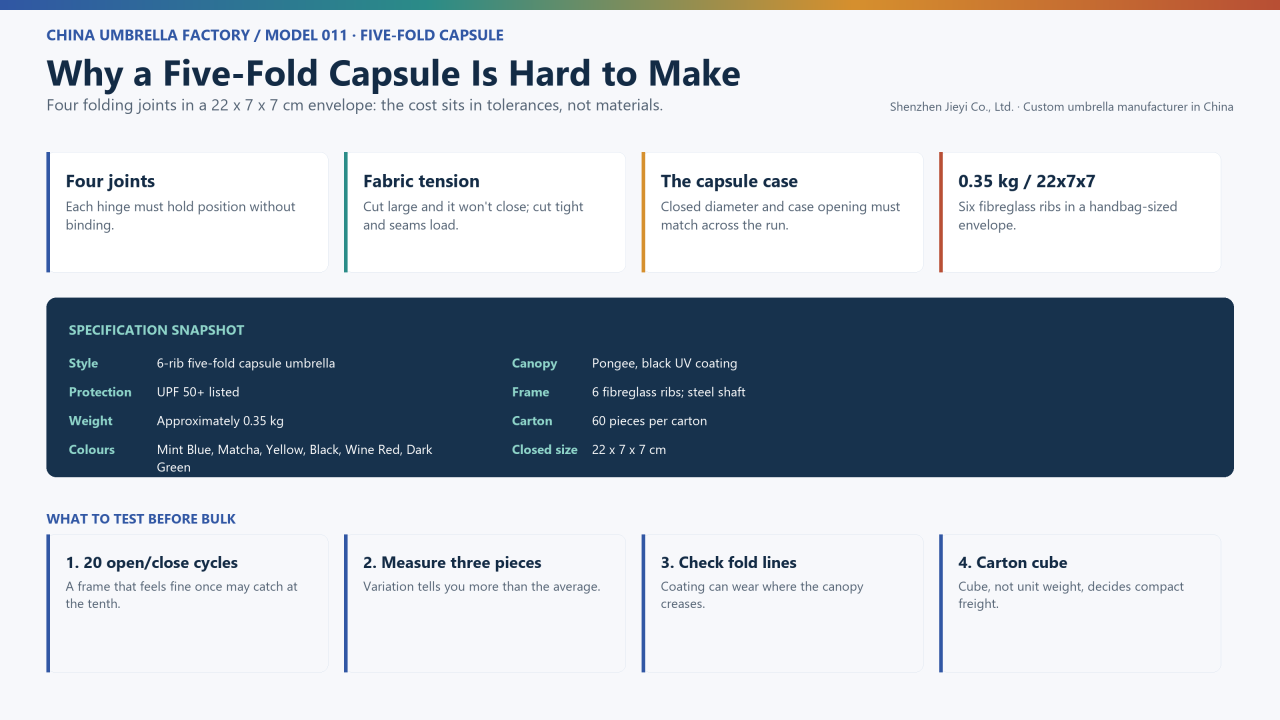
A three-fold umbrella has two folding joints. A five-fold has four, and each joint adds a place where the ribs, the stretcher and the fabric have to pass each other without rubbing. On a 6-rib frame with a 22 x 7 x 7 cm closed size, the clearance between those parts is measured in millimetres.
That is why the same factory can produce a reliable three-fold umbrella and still need several iterations on a five-fold. It is not a different category of product; it is the same mechanics squeezed into a much smaller envelope.
Where the cost actually hides
The canopy is where most of the visible quality sits, but the money goes into three less visible places.
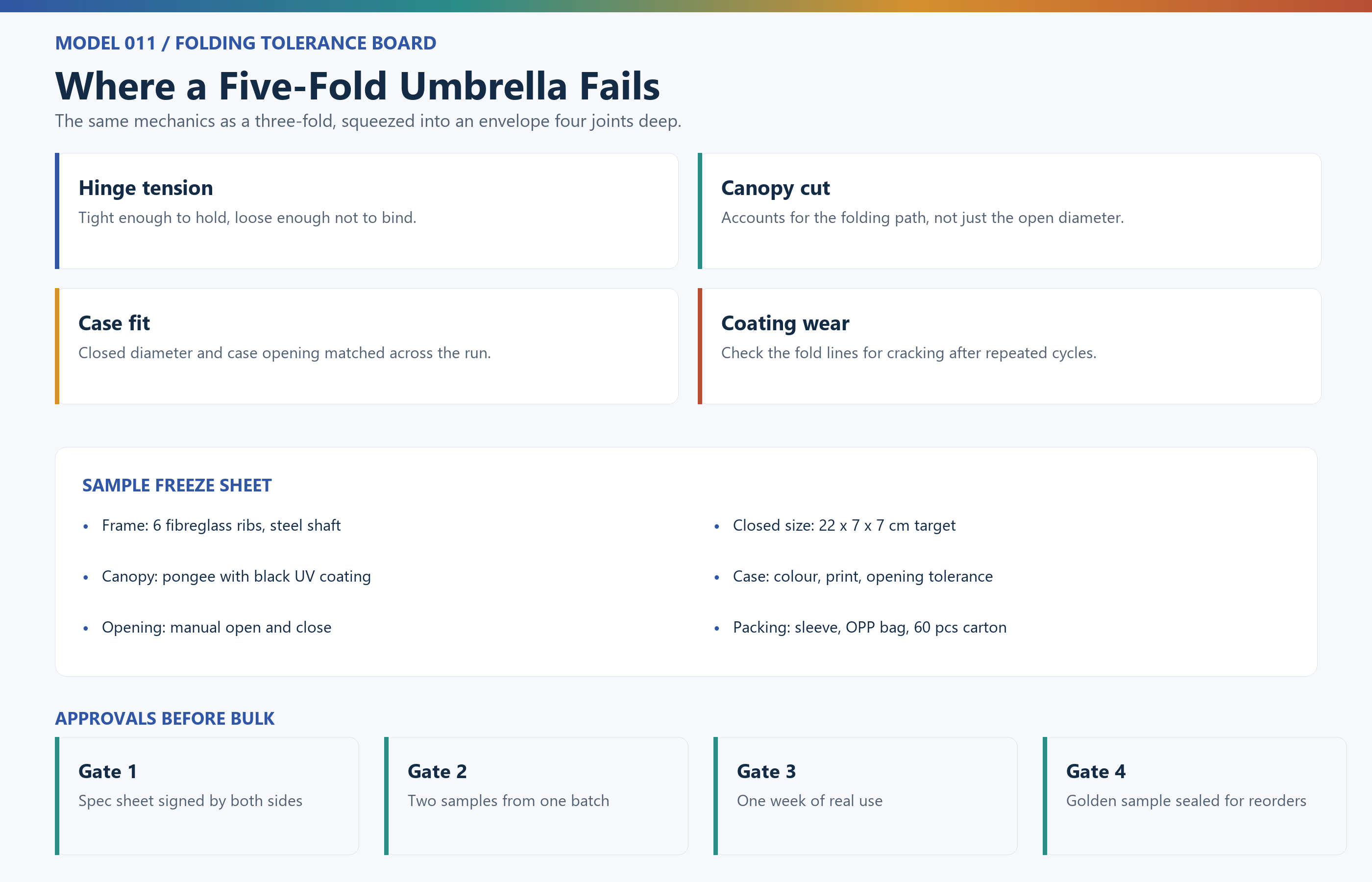
The rib hinges. Each hinge has to be tight enough to hold position and loose enough not to bind. On a five-fold frame a slightly oversized rivet shows up as a stiff open or a canopy that will not sit straight when closed.
The fabric tension. A pongee canopy with a black UV coating has to be cut to a tolerance that accounts for the folding path. Cut it slightly large and the umbrella will not close into the capsule; cut it tight and the seams take the load when the frame flexes.
The case. A capsule case is not a bag. The umbrella has to slide in and out after every use, which means the closed diameter and the case opening have to match across the whole production run, not just on the sample.
What to check at the sample table
Open and close the sample twenty times in a row. A five-fold frame that feels fine once will often start catching around the tenth cycle, and that is the failure your customer will report.
Then check the closed size with a ruler, not by eye. The specification lists 22 x 7 x 7 cm; measure three pieces from the same sample batch if you can. Variation between pieces tells you more about the production tolerance than the average does.
Finally, check the canopy coating at the fold lines. A coated fabric that creases sharply in the same place every time can wear there first, so look for any sign of cracking or a lighter line along the folds.
Packing and freight
The model packs 60 pieces per carton at roughly 0.35 kg per umbrella, which keeps the carton weight manageable for air and express shipments. The carton cube, not the unit weight, is usually what decides the freight cost on a compact product like this, so ask for the packed carton dimensions before you compare quotes.
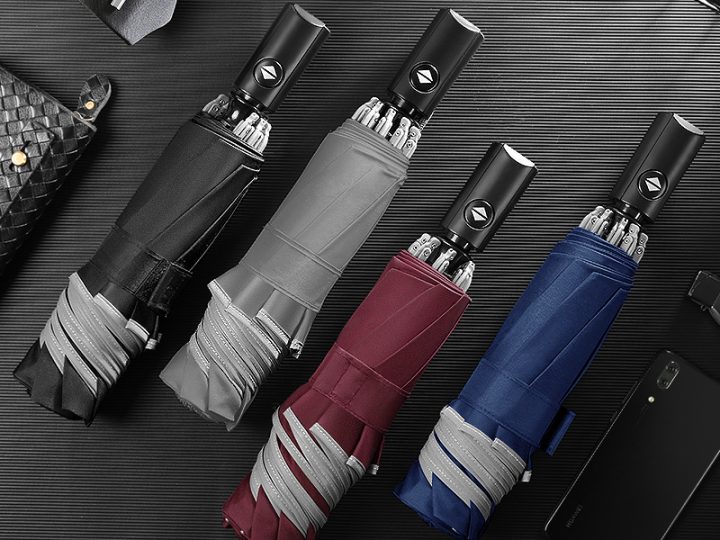
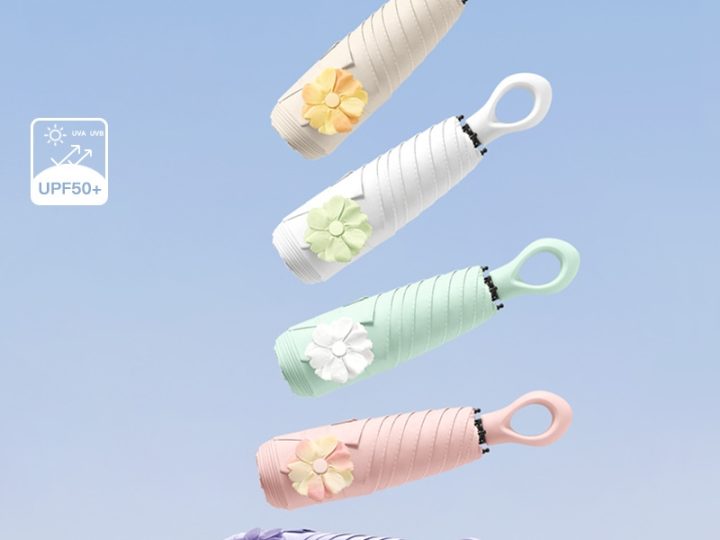
The six stock colours — Mint Blue, Matcha, Yellow, Black, Wine Red and Dark Green — cover a fashion and gift assortment without a custom dyeing run. If your brand needs a specific colour, expect a sampling cycle and a higher minimum.
When you should not choose this format
If the umbrella is a promotional giveaway with a fixed low budget, a three-fold model will be cheaper and easier to replace. If the customer needs storm performance, a five-fold frame is not the right platform regardless of rib count, because the folded geometry limits how much frame you can fit.
And if your target market returns products easily, think about the case. A capsule case is the first thing to be lost, and a replacement case is a customer-service cost that is easy to overlook at the quotation stage.
What we would do in your position
Order two samples from the same batch, test them for a week, and only then commit to a production run. If the samples hold up, the 6-rib five-fold capsule umbrella is a strong fit for handbag retail and travel ranges; compare it against the wider compact umbrella and sun umbrella ranges before fixing your assortment.
If you are building a private-label range around this format, our OEM programme covers the specification and sampling steps; for a quotation, send the market, quantity and artwork through the contact page.
Frequently asked questions
Does the capsule umbrella really provide UPF 50+ protection?
The specification lists UPF 50+ for the black UV-coated pongee canopy. Confirm the rating on the approved sample before publishing a claim.
How small is it when closed?
The listing gives a closed packing size of 22 x 7 x 7 cm. Measure production samples rather than relying on the catalogue figure.
Can the case be branded?
Yes. The capsule case can carry a printed logo or a woven label, and it is usually the first thing a customer sees.